
 EN
EN
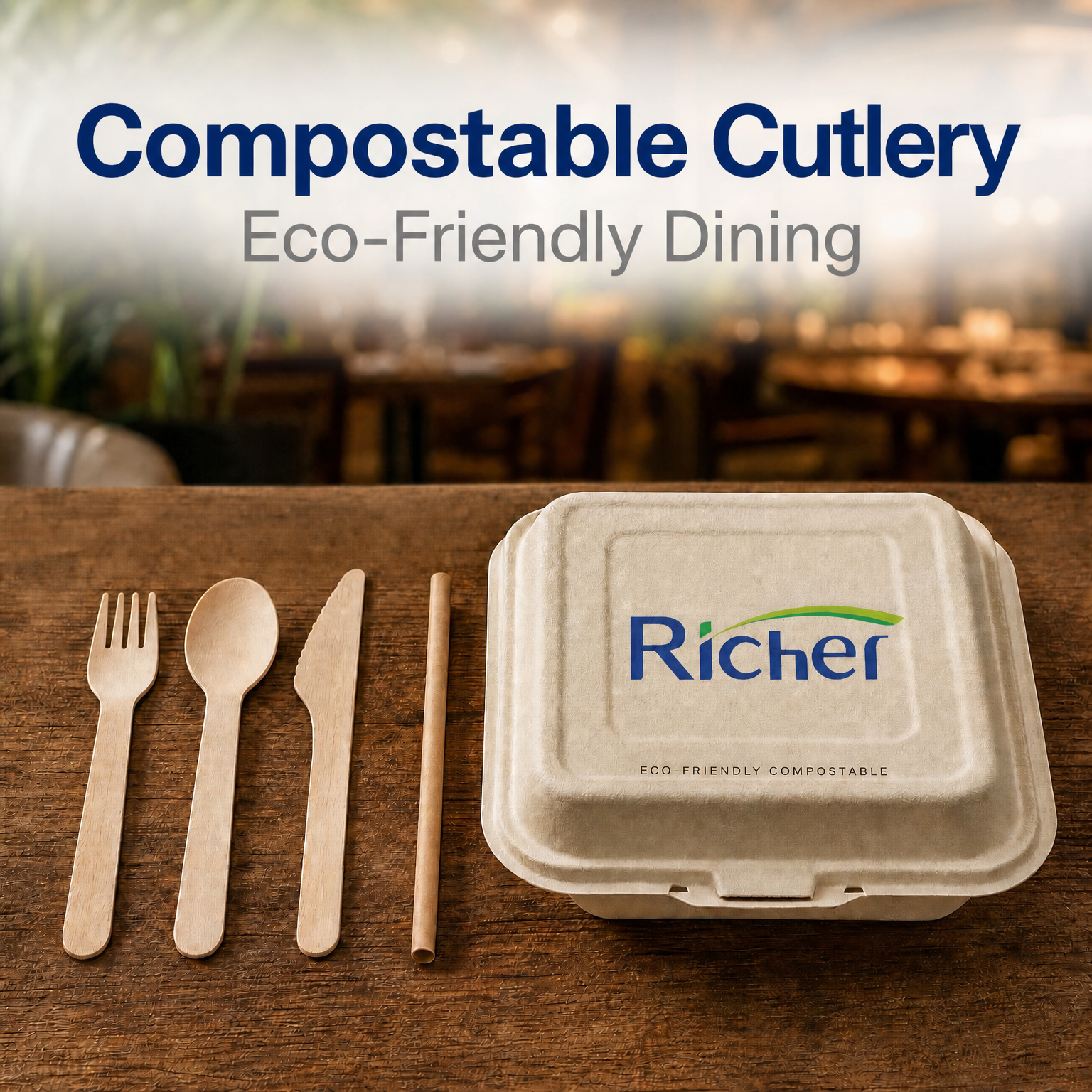
Choosing compostable cutlery means balancing heat resistance, strength, cost, and your brand story. CPLA handles hot food best, wood offers premium feel, and paper straws meet the plastic-straw ban. This guide helps you pick the right mix for your restaurant or catering business.
What Is Compostable Cutlery?
Compostable cutlery breaks down in composting conditions — no microplastics, no toxic residue. The main materials:
|
Material |
Heat Resistance |
Feel |
Best For |
|
CPLA |
High |
Plastic-like |
Hot meals |
|
Wood |
High |
Premium natural |
All dishes |
|
PLA |
Low |
Plastic-like |
Cold food |
Key Factors to Consider
1. Heat resistance Hot meals like pasta or curry need CPLA or wood — standard PLA softens at high temperatures.
2. Strength For heavy or dense foods, choose CPLA or wood over thin PLA. Test before bulk ordering.
3. Certification Look for compostability certifications (TÜV OK Compost, BPI) to back your "compostable" claim.
4. Straws Paper straws are the standard alternative under single-use plastic straw bans. Offer them with cold drinks and smoothies.
Compostable Cutlery for Different Use Cases
Restaurants
- — CPLA forks/knives/spoons for hot mains; wood for premium dishes
Catering & events
- — wood cutlery sets look premium and photograph well
Takeaway & delivery
- — CPLA holds up during transit; add paper straws
Coffee shops
- — paper straws, wooden stirrers
FAQ
Q: What is the difference between PLA and CPLA cutlery? CPLA is crystallized PLA — heat-treated for higher temperature resistance. Standard PLA suits cold food only.
Q: Are compostable cutlery and straws certified? Yes — look for TÜV OK Compost / BPI certifications to verify compostability claims.
Q: Can I customize cutlery with my brand? Wooden cutlery can be laser-printed with logos; paper straws can be custom-printed. Ask our team for options.
Ready to switch to compostable cutlery? Request a free sample set to test heat resistance and strength with your actual menu.
? [email protected] | ? www.richerpack.com