 EN
EN
In the global packaging landscape, choosing the right carton solution is a critical decision for businesses, directly impacting product safety, logistics efficiency, and overall operational costs. Regular cartons have long been a staple for packaging and shipping, while wax coated boxes have emerged as a high-performance alternative, engineered to address the limitations of traditional paper packaging. As a leading global provider of eco-friendly and custom packaging solutions with over 20 years of manufacturing experience, Richer Group has deep insights into the functional differences, application scenarios, and cost-benefit ratios of wax coated boxes and regular cartons. This article provides a professional, side-by-side comparison of the two packaging options, breaking down their core strengths and weaknesses to help businesses make informed choices aligned with their actual needs.
1. Core Material and Structural Differences
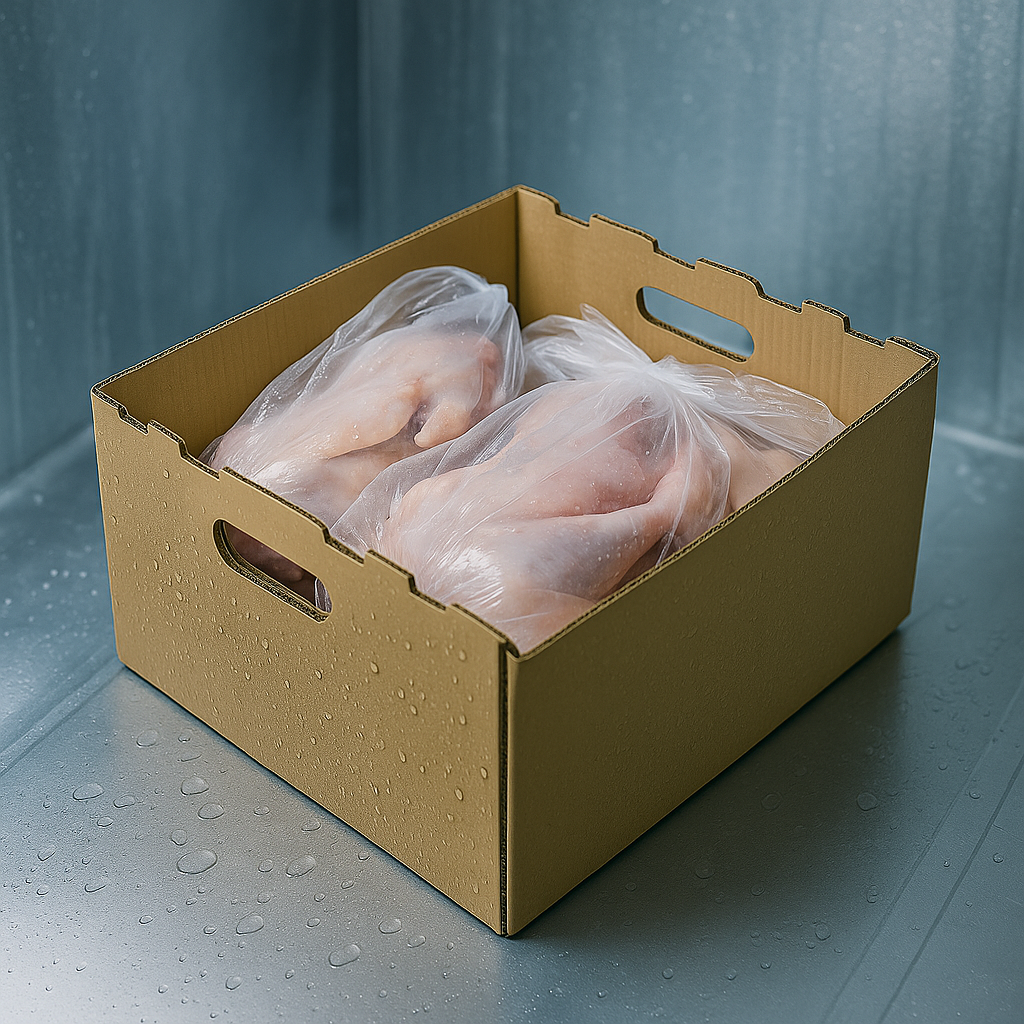
The fundamental distinction between wax coated boxes and regular cartons lies in their material composition and structural design. Regular cartons are typically made from uncoated kraft paper or corrugated cardboard, relying on the inherent fiber strength of paper for structural support; they have a porous surface that allows moisture and air to pass through easily. In contrast, wax coated boxes—a flagship product of Richer Group for food and logistics packaging—are crafted by applying a seamless, food-grade wax layer to high-quality kraft paper or corrugated board. This wax coating forms a non-porous hydrophobic barrier on the box surface, modifying the paper’s natural properties while retaining the lightweight and foldable advantages of traditional cartons. Richer Group’s wax coated boxes use premium wax materials compliant with FDA and FSC standards, ensuring the coating bonds tightly with the paper base and does not peel off during handling or shipping.
2. Performance Comparison: Key Functional Metrics
When evaluating packaging performance, four core metrics—moisture resistance, tear resistance, temperature adaptability, and microbial barrier—reveal the clear gaps between wax coated boxes and regular cartons.
- Moisture resistance: Regular cartons absorb moisture quickly, leading to structural collapse, paper delamination, and product damage in humid environments or cold chain logistics; wax coated boxes repel liquid and atmospheric moisture entirely, keeping contents dry even in high-humidity conditions.
- Tear resistance: Regular cartons become brittle and easy to tear when damp or exposed to low temperatures; Richer Group’s wax coated boxes reinforce the paper’s structural integrity with wax coating, maintaining rigidity and tear resistance in sub-zero freezing or tropical humid climates.
- Microbial barrier: The porous surface of regular cartons allows bacteria and mold to attach and reproduce, risking product spoilage; the non-porous wax layer of wax coated boxes blocks microbial intrusion, critical for food and perishable product packaging.
- Temperature adaptability: Regular cartons deform under extreme temperature fluctuations; wax coated boxes withstand rapid temperature changes, making them suitable for cross-border cold chain shipping and long-distance transportation.
Richer Group’s third-party testing data shows that its wax coated boxes outperform regular cartons by over 85% in moisture resistance and 60% in low-temperature tear resistance, with a 98.7% first-time inspection pass rate for all finished products.
3. Industry Application Scenarios: Where Each Excels
There is no one-size-fits-all packaging solution, and wax coated boxes and regular cartons each have their optimal application scenarios, determined by product characteristics and logistics requirements.
Regular cartons are ideal for dry, non-perishable products such as household goods, clothing, and office supplies with short-distance shipping or indoor storage needs. They are cost-effective for large-batch, low-protection packaging and support easy printing for brand promotion—making them a practical choice for businesses with basic packaging demands.
Wax coated boxes shine in industries with strict packaging requirements, including food and beverage (frozen foods, takeaways, fresh produce), cold chain logistics, seafood, and agricultural products. They are also the preferred option for cross-border shipping, where products face long transit times and variable environmental conditions. Richer Group tailors wax coated box solutions for these high-demand industries, offering customizable coating thickness and structural designs to meet the unique needs of frozen food, seafood, and pharmaceutical packaging.
4. Cost and Sustainability Balance
Cost and sustainability are two key factors businesses consider when selecting packaging, and the two options present distinct trade-offs. Regular cartons have lower upfront raw material costs, making them economical for low-risk packaging, but they lead to higher indirect costs due to product damage from moisture or structural failure during shipping. Wax coated boxes have a slightly higher upfront cost due to the food-grade wax coating and advanced manufacturing process, but they reduce product loss rates significantly, resulting in a lower total cost of ownership for businesses with high-protection packaging needs.
In terms of sustainability, both options use paper as the core material, aligning with global recyclable packaging trends. Richer Group elevates the sustainability of wax coated boxes by using 100% recyclable kraft paper as the base material and researching biodegradable wax coatings through its subsidiary Xiamen Greenlife Eco Tech Co., Ltd. Over 40% of Richer Group’s annual production uses eco-friendly and compostable materials, compliant with EN13432 and ASTM D6400 standards—ensuring its wax coated boxes deliver high performance while minimizing environmental impact.
5. How Richer Group Helps You Choose the Right Option
The answer to “wax coated boxes vs. regular cartons” ultimately depends on your business’s specific product, logistics, and budget needs. As a one-stop packaging solution provider with a 13,000-square-meter advanced manufacturing facility and global export reach to over 50 countries, Richer Group offers personalized packaging consulting and custom design services to match businesses with the right solution. For businesses with basic dry product packaging needs, Richer Group provides high-quality regular cartons with custom printing and structural optimization; for those in food, cold chain, or cross-border shipping industries, the group’s FDA-compliant wax coated boxes with OEM/ODM services deliver tailored, high-performance protection. With strict ISO9001 quality control and on-time delivery guarantees, Richer Group ensures its packaging solutions balance functionality, cost, and sustainability for every client.
In conclusion, regular cartons are a cost-effective, practical choice for basic packaging needs, while wax coated boxes are a high-performance solution for industries with strict protection and environmental requirements. Richer Group leverages its decades of packaging expertise and sustainable innovation to craft both options to the highest standards, helping businesses worldwide select the packaging that aligns with their operational goals and long-term sustainability commitments.