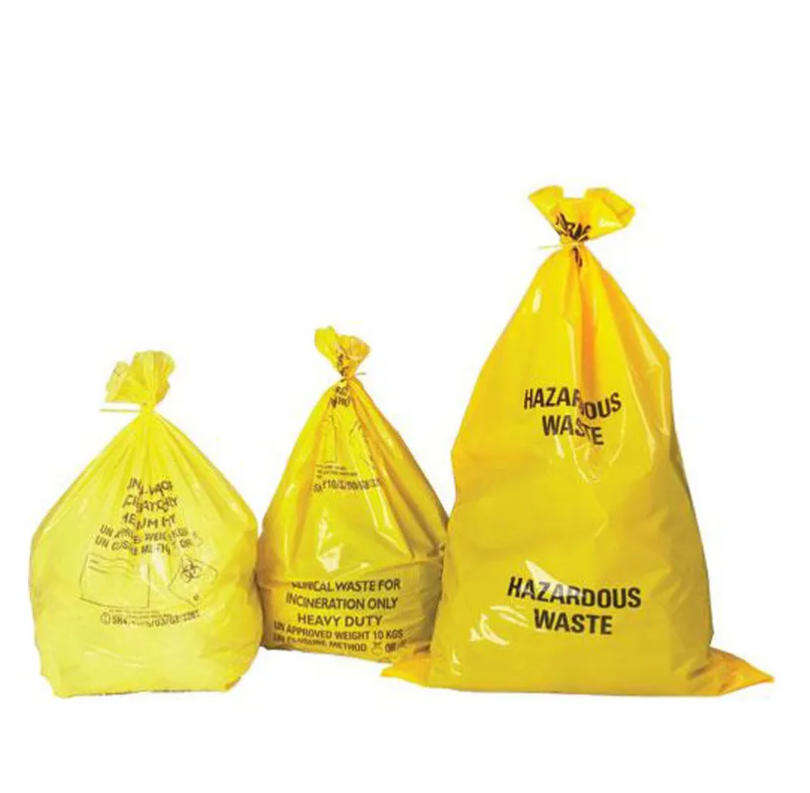
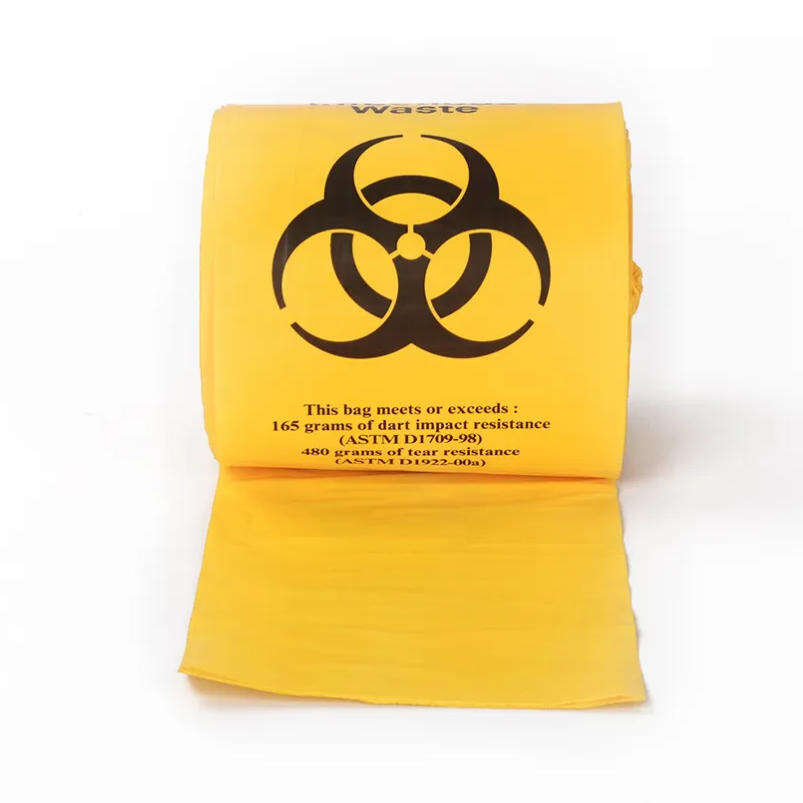
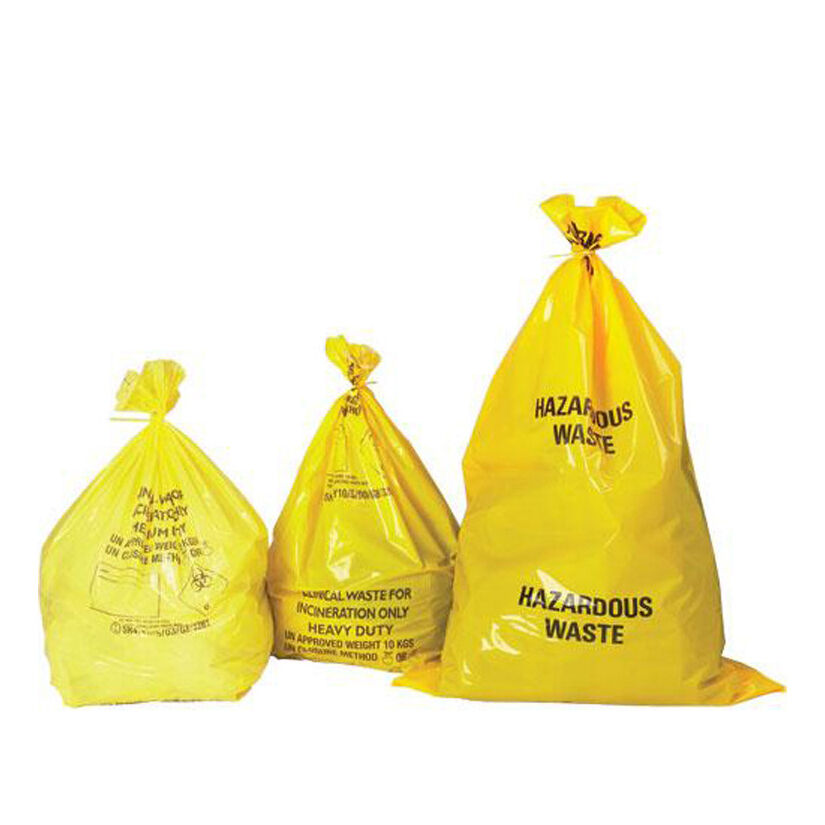
Yellow hazardous waste bags are color coded packaging solutions designed for the containment of specific types of hazardous waste that are not exclusively biohazardous, including chemical waste (e.g., expired solvents, corrosive cleaners), pharmaceutical waste (e.g., unused antibiotics, chemotherapy drugs), and some types of industrial hazardous waste. The yellow color is mandated by regulations in many regions, such as the European Union’s REACH Regulation and the US Environmental Protection Agency (EPA) guidelines, as it signals the need for specialized handling and disposal—distinct from general waste (black bags) or biohazard waste (red bags). These bags are constructed from chemically resistant materials, typically LDPE (low density polyethylene) or a LDPE HDPE blend, which can withstand exposure to common hazardous substances without degradation. LDPE is preferred for its flexibility and resistance to oils, solvents, and mild acids, making it suitable for liquid or semi liquid hazardous waste. Thickness ranges from 5 to 8 mil, providing sufficient structural strength to prevent tearing during transport. Design features include reinforced seams to avoid splitting under weight, and printed labels that specify the waste type (e.g., “PHARMACEUTICAL WASTE – DO NOT INCINERATE WITH GENERAL WASTE”) alongside hazard symbols (e.g., skull and crossbones for toxic waste, flame for flammable waste). Some variants include a barrier layer (e.g., ethylene vinyl acetate) to enhance chemical resistance for high risk waste. Sizes range from 30x40 cm for small office chemical waste to 80x100 cm for industrial waste collection. Application scenarios: in pharmaceutical manufacturing plants, they collect expired drug batches; in industrial facilities, they hold used solvents from cleaning processes; in schools, they contain expired laboratory chemicals (e.g., acids, bases). A practical case is a community pharmacy that used yellow hazardous waste bags for unused opioids and other controlled substances. The chemically resistant LDPE material prevented drug leakage, and the clear labeling ensured compliance with DEA (Drug Enforcement Administration) disposal regulations. Over a year, the pharmacy avoided fines related to improper pharmaceutical waste disposal. For organizations generating non biohazardous hazardous waste, ensuring yellow hazardous waste bags meet local color coding and chemical resistance standards is key. Interested parties are invited to contact us to verify material compatibility with specific hazardous substances and learn about compliance with regional disposal regulations.

19
Jul
19
Jul
10
Oct
10
Oct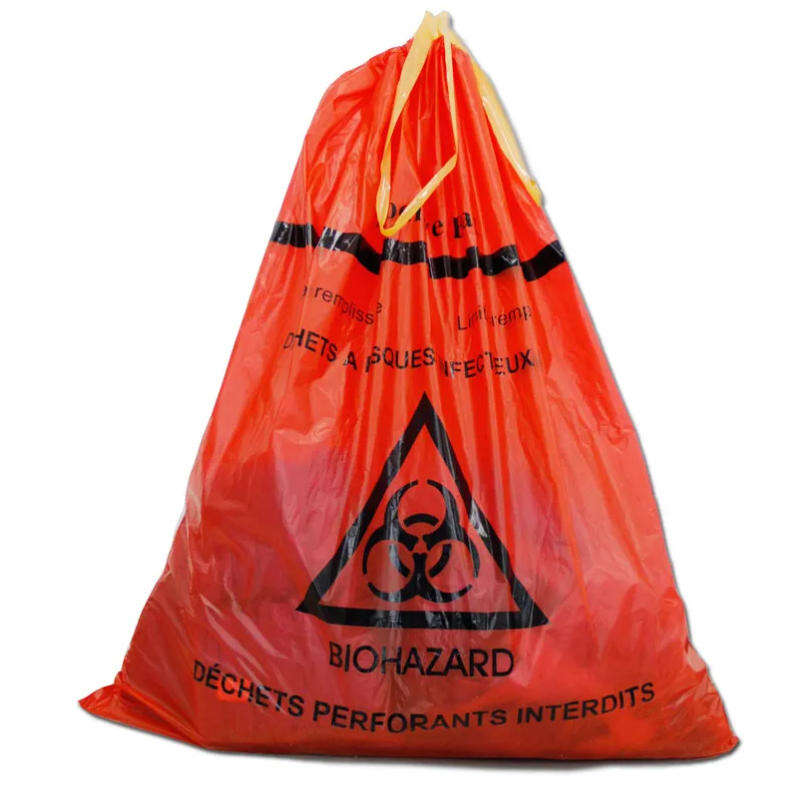

Xiamen Richer Plastic Co.,Ltd. provides custom plastic manufacturing solutions for industrial applications. Our precision molding and sustainable processes deliver high-quality components. Trusted by global partners. Contact us today.
4F,Bldg 3 Aviation Free Trade Plaza,No.422 Gaoqi North Rd.,Huli District,Xiamen,361011,China
Copyright © 2025 by Xiamen Richer Plastic Co.,Ltd. Privacy Policy
 EN
EN