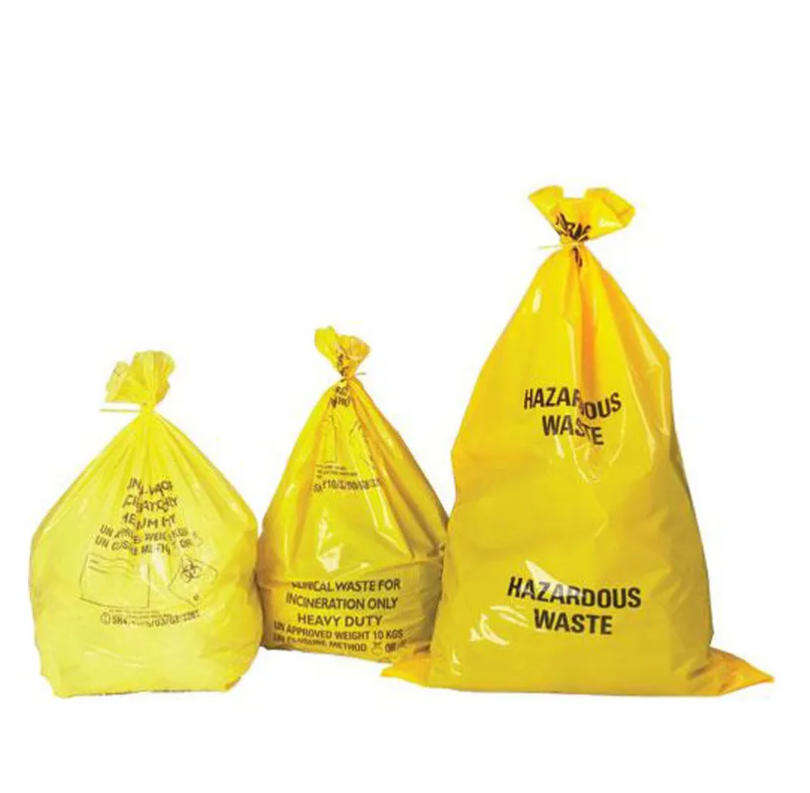
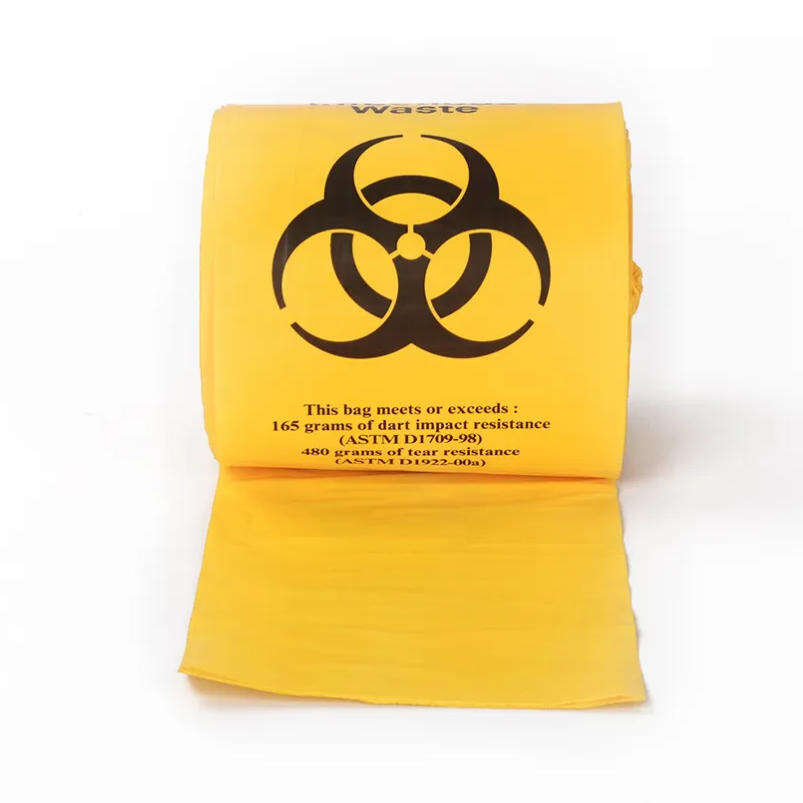
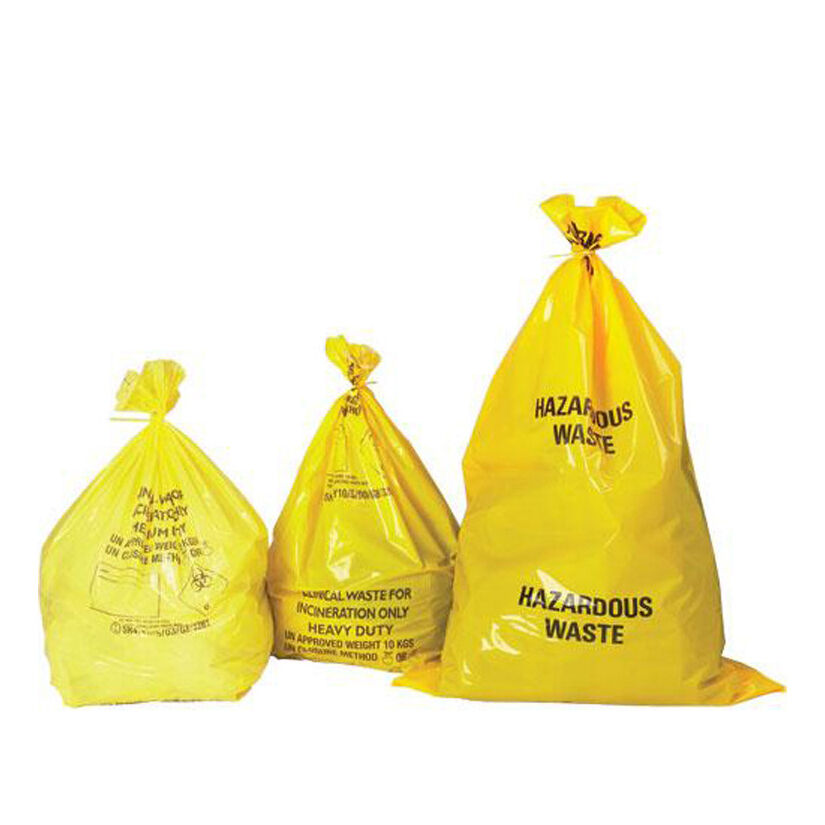
Yellow biohazard bags are a globally recognized color coded packaging solution for specific types of biohazardous waste, primarily sharps waste (e.g., needles, scalpels, broken glass) and pathological waste (e.g., human tissue, animal organs). The yellow color is mandated by regulations in most regions, including the European Union’s Waste Framework Directive and India’s Biomedical Waste Management Rules, as it provides clear visual differentiation from other waste types (e.g., red for general infectious waste) and signals the need for specialized handling. These bags are constructed from thick, puncture resistant materials—typically 6 to 8 mil HDPE or a cross linked HDPE blend. Cross linking enhances the material’s tensile strength, making it highly resistant to penetration by sharp objects, a critical feature for containing sharps that could cause needlestick injuries. The material is also non toxic and does not release harmful substances when exposed to biological fluids or during incineration (the most common disposal method for sharps waste). Design elements include reinforced bottoms to prevent splitting under the weight of solid waste, and printed labels that specify the waste type (e.g., “SHARPS WASTE – DO NOT RECYCLE”) alongside the biohazard symbol. Some variants include a transparent window made from food grade polypropylene (PP), allowing staff to visually inspect contents without opening the bag. Sizes range from 25x35 cm for small clinic use to 50x60 cm for hospital ward collection. Application scenarios: in hospitals, they are placed in sharps containers in nursing stations to collect used hypodermic needles; in veterinary hospitals, they hold animal vaccination needles and surgical blades; in research labs, they contain broken glassware contaminated with biological samples. A notable case is a large oncology center that switched to yellow biohazard bags for its chemotherapy sharps waste. The 7 mil cross linked HDPE material prevented needle punctures, reducing sharps related injuries among nurses by 38% compared to previous thinner bags. For organizations handling sharps or pathological waste, ensuring yellow biohazard bags meet local color coding and material standards is essential. Interested parties are invited to contact us for samples and detailed compliance documentation to verify alignment with regional regulations.
19
Jul
30
Sep
10
Oct
10
Oct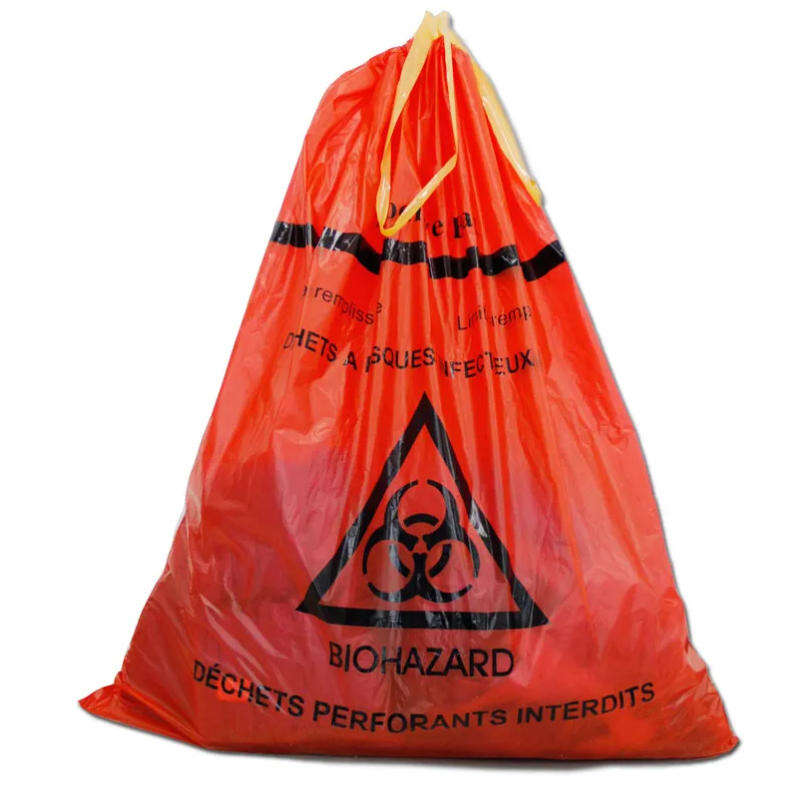
Xiamen Richer Plastic Co.,Ltd. provides custom plastic manufacturing solutions for industrial applications. Our precision molding and sustainable processes deliver high-quality components. Trusted by global partners. Contact us today.
4F,Bldg 3 Aviation Free Trade Plaza,No.422 Gaoqi North Rd.,Huli District,Xiamen,361011,China
Copyright © 2025 by Xiamen Richer Plastic Co.,Ltd. Privacy Policy
 EN
EN