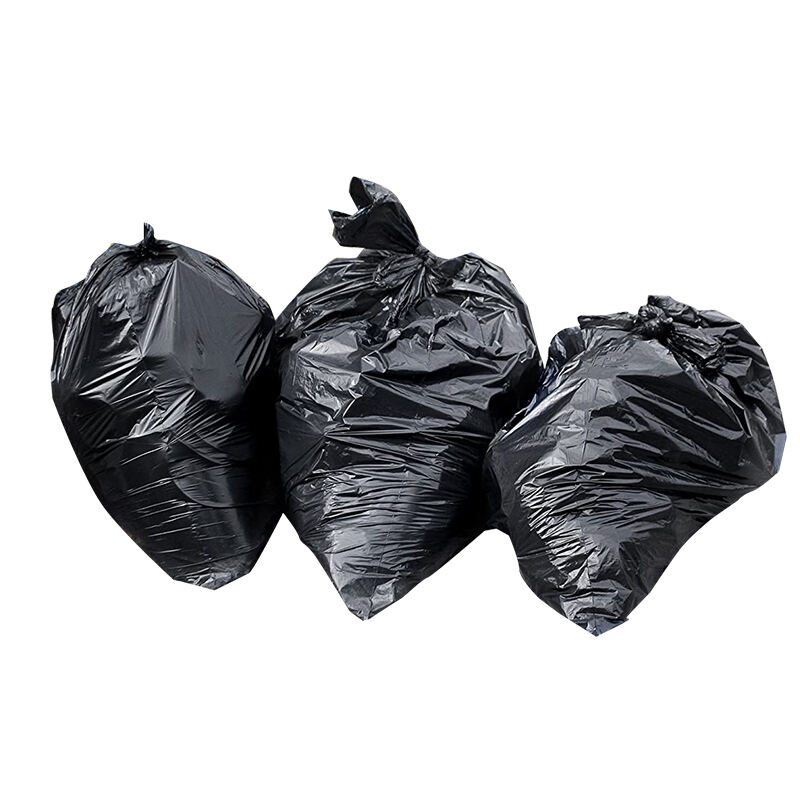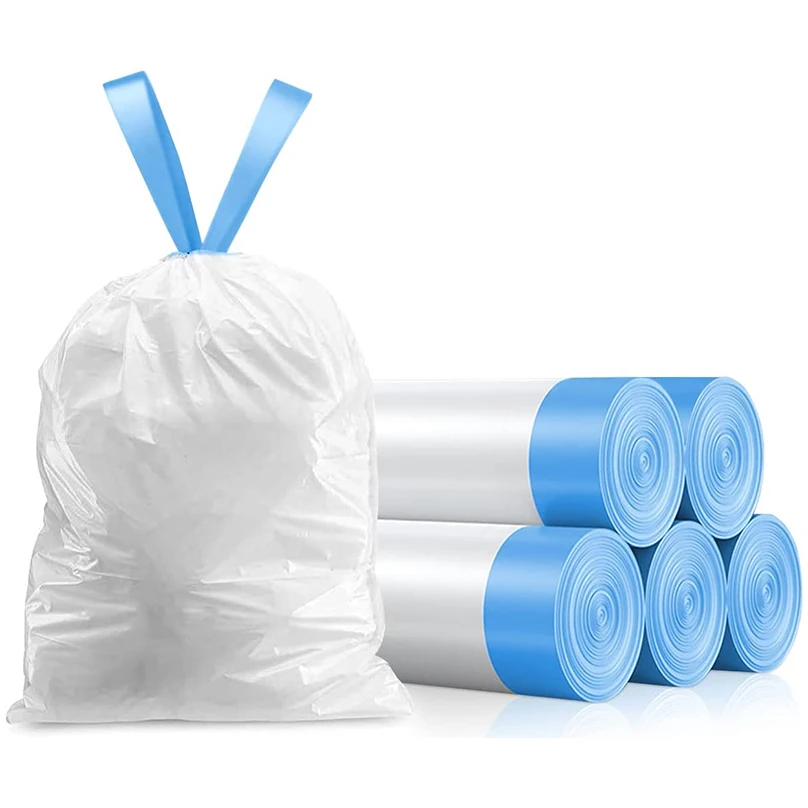
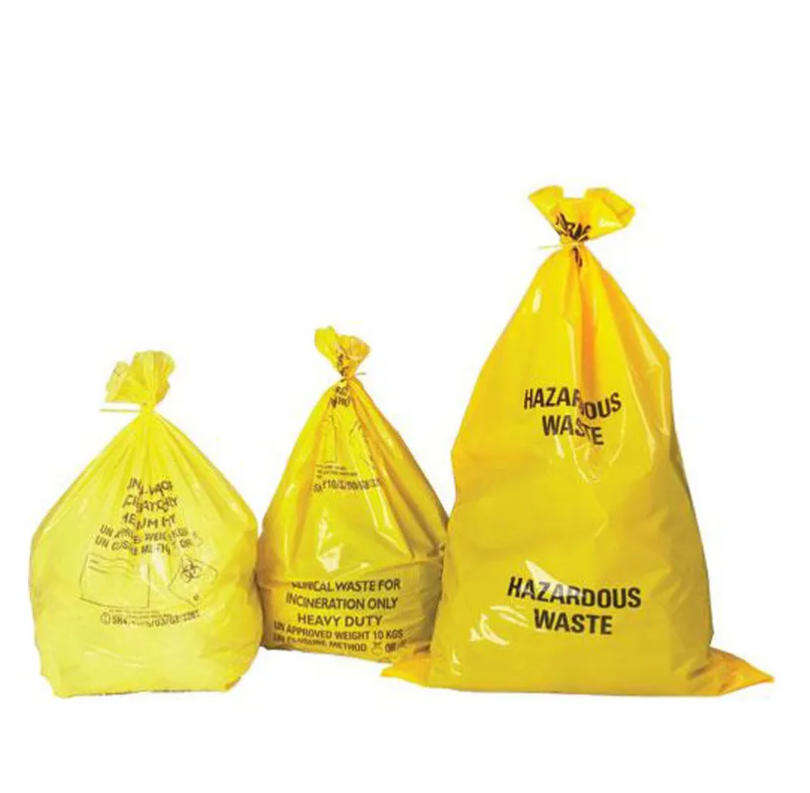
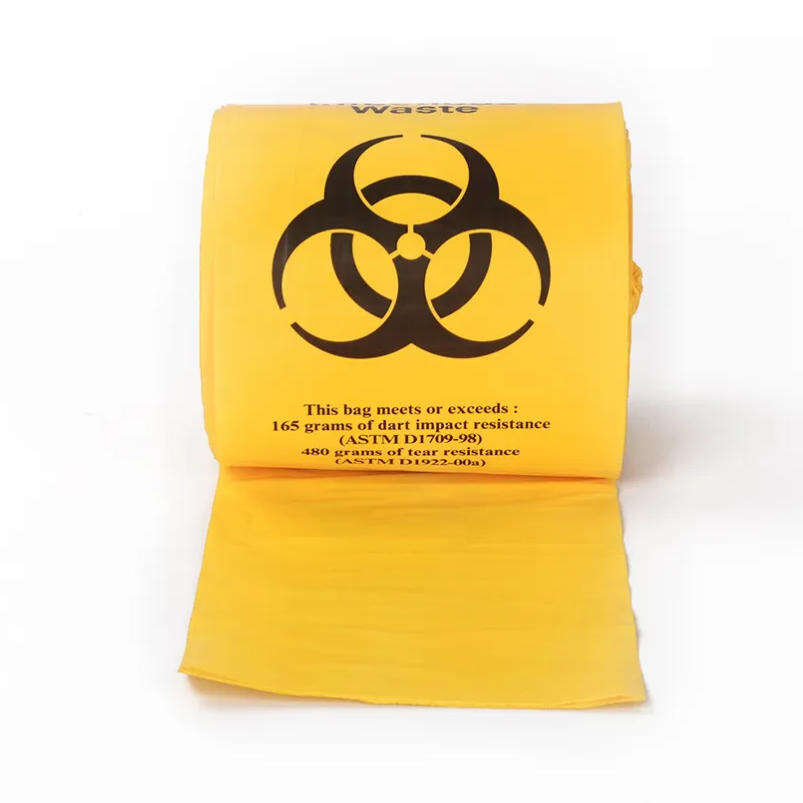
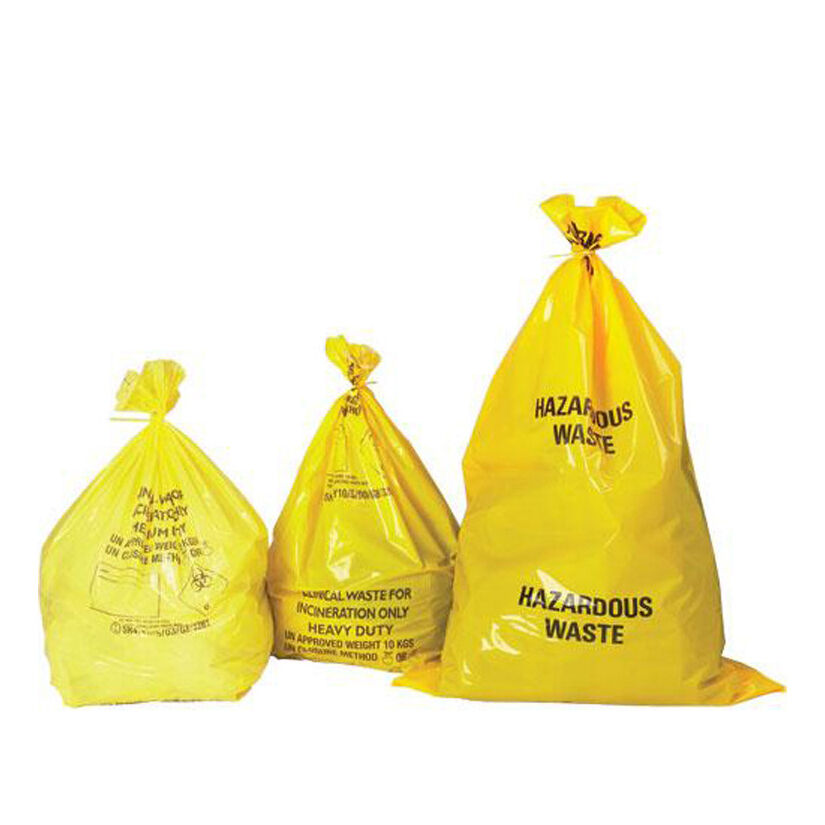
Biohazard garbage bags are a type of biohazard packaging designed for the collection and temporary storage of small volume biohazard waste, typically in non clinical settings such as homes, small clinics, and research labs with low waste generation. Unlike large scale bio medical waste disposal bags used in hospitals, these garbage bags are smaller in size (usually 25x35 cm to 30x40 cm) and designed for easy handling by individuals without specialized waste management training. They are made from lightweight yet durable HDPE with a thickness of 3 4 mil, which provides sufficient puncture resistance for common biohazard waste items (e.g., home blood glucose test strips, small bandages) while remaining flexible enough to fit standard household garbage bins. Key design features of biohazard garbage bags include a drawstring closure or a flat top with perforations for easy tearing from a roll. The drawstring design is particularly popular for home use, as it allows users to seal the bag quickly by pulling the strings, reducing the risk of exposure to waste contents. The bags are printed with a simple biohazard symbol and basic instructions (e.g., “SEAL BEFORE DISPOSAL”) in clear, easy to read font, ensuring that even untrained users understand proper handling. Some variants are also scented with a mild, non toxic fragrance to mask odors from organic waste (e.g., soiled bandages), improving user comfort. Application scenarios for biohazard garbage bags are diverse. In home healthcare, they are used by individuals with chronic conditions (e.g., diabetes, hemophilia) to dispose of used lancets, syringes, and blood soaked gauze. In small doctor’s offices or urgent care clinics with low patient volume, they collect waste from routine exams (e.g., throat swabs, disposable gloves) before the waste is transferred to larger biohazard containers for final disposal. In school science labs, they contain small amounts of biological waste (e.g., frog dissection remains, bacterial culture plates) generated during student experiments. A real world use case is a home healthcare company that provides biohazard garbage bags to patients receiving in home dialysis. The drawstring closure allows patients to safely dispose of used dialysis filters and tubing at home, and the company collects the sealed bags weekly for proper disposal, reducing the patient’s burden of waste management. Another example is a small pediatric clinic that uses the bags to collect used vaccine syringes and band aids from well child visits— the lightweight design makes it easy for staff to carry the bags to the central biohazard waste bin. When selecting biohazard garbage bags, it is important to confirm that they meet local regulations for home and small scale biohazard waste (e.g., the US EPA’s guidelines for household medical waste) and that the material is compatible with common disinfectants used in cleaning. For assistance in choosing the right size and type of biohazard garbage bags for your specific non clinical setting, please contact us—we can provide guidance on regulatory compliance and product suitability.

19
Jul
19
Jul
10
Oct
10
Oct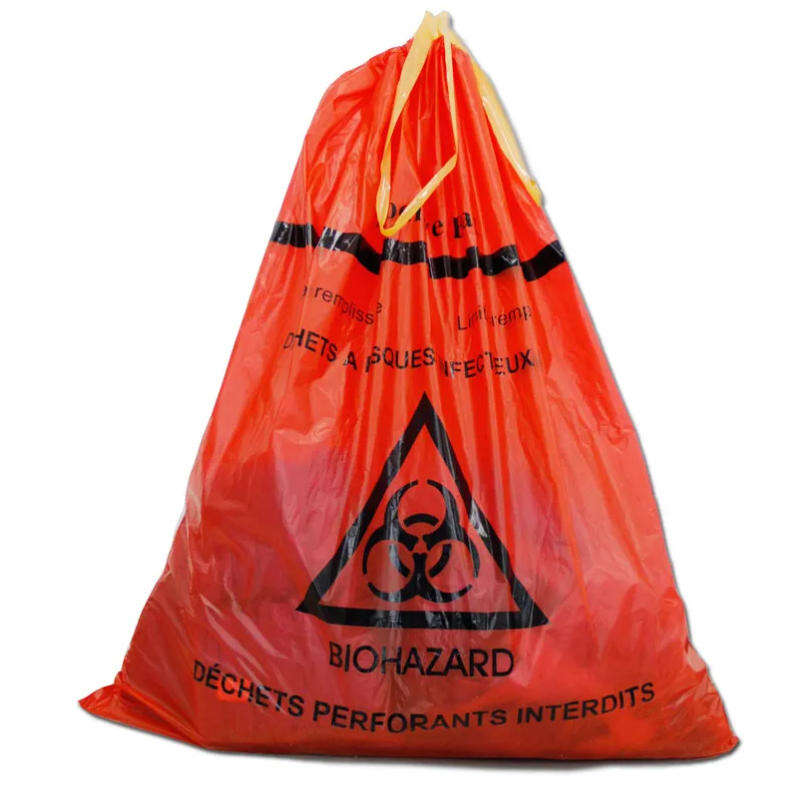

Xiamen Richer Plastic Co.,Ltd. provides custom plastic manufacturing solutions for industrial applications. Our precision molding and sustainable processes deliver high-quality components. Trusted by global partners. Contact us today.
4F,Bldg 3 Aviation Free Trade Plaza,No.422 Gaoqi North Rd.,Huli District,Xiamen,361011,China
Copyright © 2025 by Xiamen Richer Plastic Co.,Ltd. Privacy Policy
 EN
EN