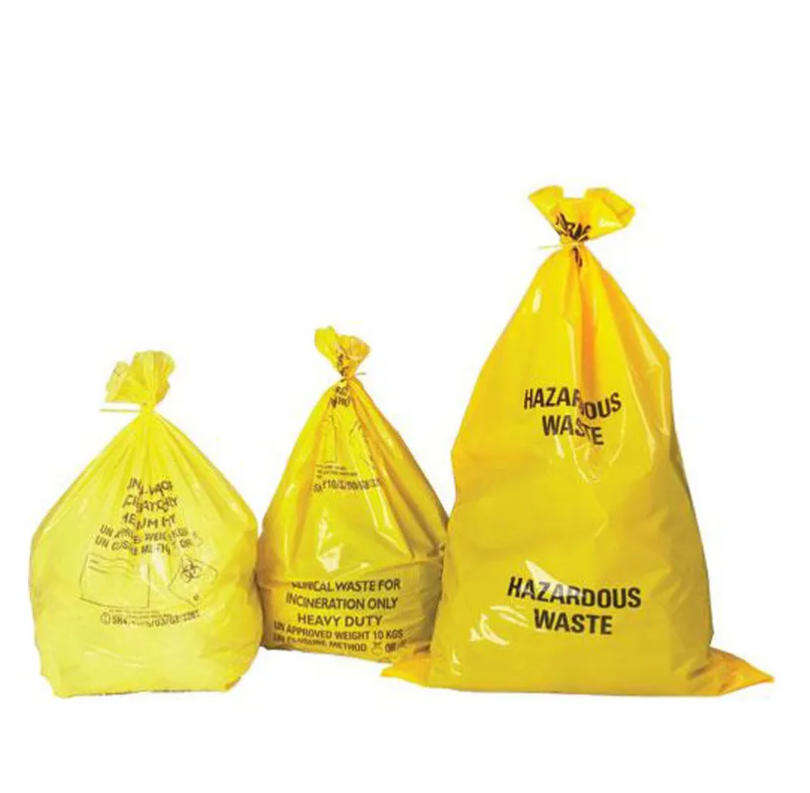
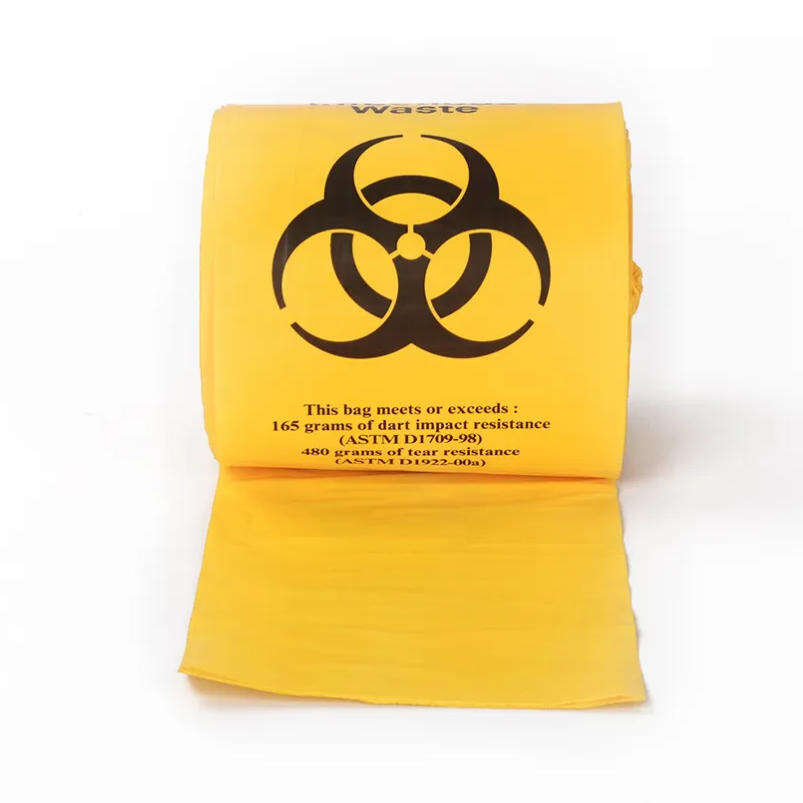
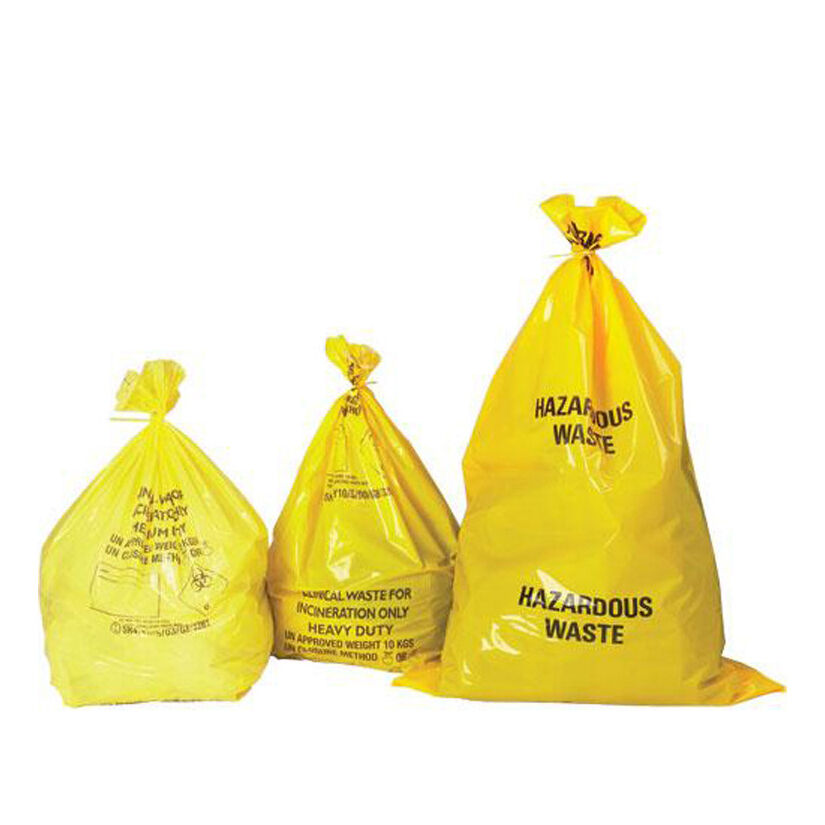
Biomedical waste bags are essential components of biomedical waste management systems, designed to contain, transport, and store biomedical waste—defined as any waste generated during healthcare delivery, medical research, or pharmaceutical production that may contain pathogens, toxic substances, or sharps. These bags are manufactured to strict quality standards to ensure they protect healthcare workers, waste handlers, and the environment from exposure to hazardous contents. Key standards governing their production include the International Organization for Standardization’s ISO 11139 (for sterilization of healthcare products, applicable to autoclavable bags), the American Society for Testing and Materials’ ASTM D1709 (for puncture resistance of plastic films), and China’s GB 19273 (for packaging materials for biomedical waste). Material selection for biomedical waste bags depends on the specific type of biomedical waste. For infectious waste (e.g., contaminated surgical gloves, used wound dressings), HDPE with a thickness of 4 5 mil is used—HDPE offers good tensile strength and resistance to biological fluids. For sharps waste (e.g., hypodermic needles, surgical blades), thicker HDPE (6 8 mil) or a composite material (HDPE with a layer of ethylene vinyl acetate, EVA) is preferred, as these materials provide enhanced puncture resistance. For pharmaceutical waste (e.g., expired antibiotics, chemotherapy drugs), LDPE bags are suitable because LDPE has better chemical resistance to organic solvents and drug compounds. For pathological waste (e.g., human tissue, animal organs), multi layer bags with an inner layer of barrier film (to prevent odor and fluid leakage) and an outer layer of HDPE (for strength) are used. Design features of biomedical waste bags are focused on safety, usability, and compliance. Color coding is a universal design element: red bags for infectious waste, yellow for sharps, blue for pharmaceutical waste, and brown for pathological waste—this ensures that waste is sorted correctly at the point of generation. Many bags include a “fill line” indicator printed on the side, showing the maximum safe fill level (usually two thirds of the bag’s capacity) to prevent overfilling. Closure systems vary by waste type: tie closures for solid waste, heat seals for liquid waste, and snap on caps for small sharps containers that can be inserted into larger bags. Some bags also have barcodes printed on them, allowing for tracking of waste from generation to disposal—this is particularly useful for facilities that need to comply with audit requirements (e.g., hospitals accredited by The Joint Commission). Application examples include a large oncology center that uses blue biomedical waste bags to collect chemotherapy drug waste. The LDPE material prevents the drugs from leaking through the bag, protecting staff from exposure to toxic substances. Another example is a medical research institute that uses brown multi layer bags for animal tissue waste from its cancer research studies—the barrier film layer contains odors and prevents fluid leakage during transport to the incineration facility. For healthcare facilities, research labs, or pharmaceutical companies looking to implement or upgrade their biomedical waste bag systems, conducting a waste audit to identify the types and volumes of waste generated is the first step. Interested parties are invited to contact us to schedule a waste audit and receive customized recommendations for biomedical waste bags that meet their specific needs and regulatory requirements.
19
Jul
19
Jul
10
Oct
10
Oct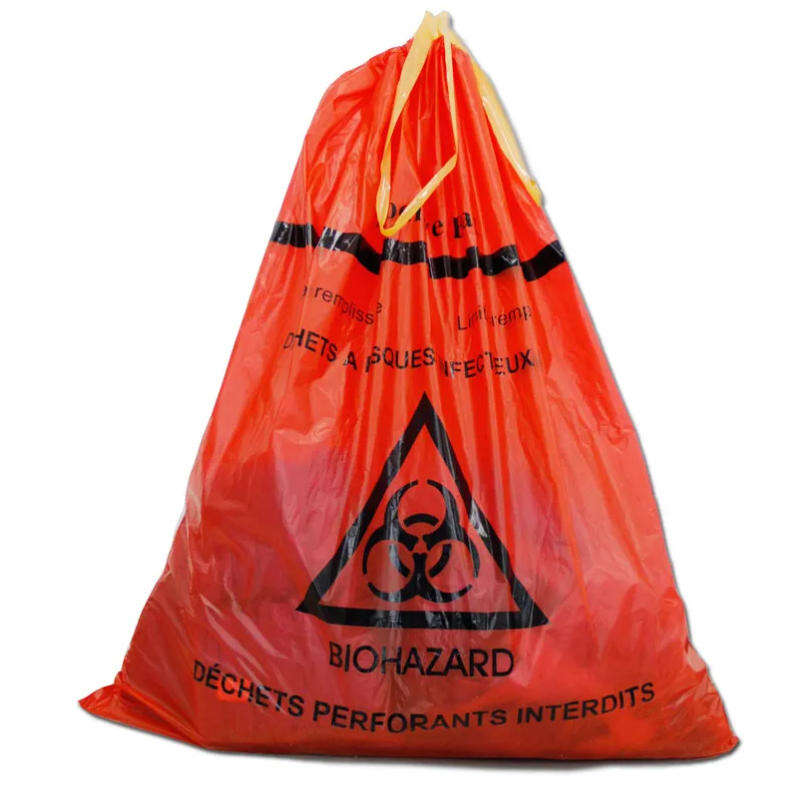

Xiamen Richer Plastic Co.,Ltd. provides custom plastic manufacturing solutions for industrial applications. Our precision molding and sustainable processes deliver high-quality components. Trusted by global partners. Contact us today.
4F,Bldg 3 Aviation Free Trade Plaza,No.422 Gaoqi North Rd.,Huli District,Xiamen,361011,China
Copyright © 2025 by Xiamen Richer Plastic Co.,Ltd. Privacy Policy
 EN
EN