 EN
Custom Pizza Box Design Brief: How to Specify Artwork and Structure
A custom pizza box should do more than carry a logo. For a restaurant group, bakery, distributor, or foodservice brand, the box has to support the pizza size, the handoff, the delivery route, and the customer’s first impression. A clear brief for personalized pizza boxes turns those moving parts into information a packaging supplier can review before artwork preparation and sampling begin.
From a B2B purchasing perspective, the practical goal is not to choose a box from a catalogue and add artwork at the end. It is to give design, operations, and purchasing teams one shared description of what must be printed, how the box must fold, and what conditions it will face after leaving the kitchen.
Start with the use case, not the logo
Before preparing files for personalized pizza boxes, write down the pizza format and the delivery situation. Confirm the finished pizza diameter, expected height with toppings, number of slices, and whether the box will carry one pizza or be packed with other items. Also note whether orders are collected at a counter, stacked for dispatch, or delivered over a longer route.
These answers guide dimensions and structure. They also reduce a common project gap: a marketing team approves a graphic while the operations team later discovers that the lid, sidewall, or carrying method needs different space. Custom display requirements usually mean that structure and specification control need to be confirmed earlier.
- Pizza diameter and maximum loaded height
- Single-order, multi-pizza, takeaway, or delivery use
- Expected stacking height and dispatch handling
- Target markets and any local food-contact or labelling checks that still need verification
- Whether inserts, liners, sealing labels, or promotional cards will be used
Prepare artwork as a production brief
Artwork for personalized pizza boxes should identify every printable panel, not only the lid. A supplier needs to know which surfaces carry the primary logo, which panels need addressable information, and where a design must avoid folds, locking tabs, or glue areas. Provide the brand files in the requested editable format, identify the color references, and list required text exactly as it should appear.
For each panel, label the priority: essential brand mark, optional message, operational text, or blank area. This matters when the final dieline changes. If the artwork is built around a fixed image rather than a confirmed template, text can move into a crease or be lost at a locking edge.
| Artwork item | What to specify | Why it matters |
|---|---|---|
| Logo placement | Lid, side panels, inside lid, or base | Keeps the main mark clear after folding and stacking. |
| Color direction | Named brand colors, print coverage, and preferred background | Lets the supplier assess the printing approach without guessing. |
| Mandatory text | Store message, handling note, QR code, or campaign copy | Separates non-negotiable content from decorative elements. |
| Safe areas | Keep-clear zones around creases, tabs, locks, and glue | Reduces revision risk when the dieline is finalized. |
If the brief includes a QR code or fine text, ask for a proof at the intended size. Treat readability as an approval point rather than assuming it will survive every board surface and print treatment.
Define the box structure in plain operational terms
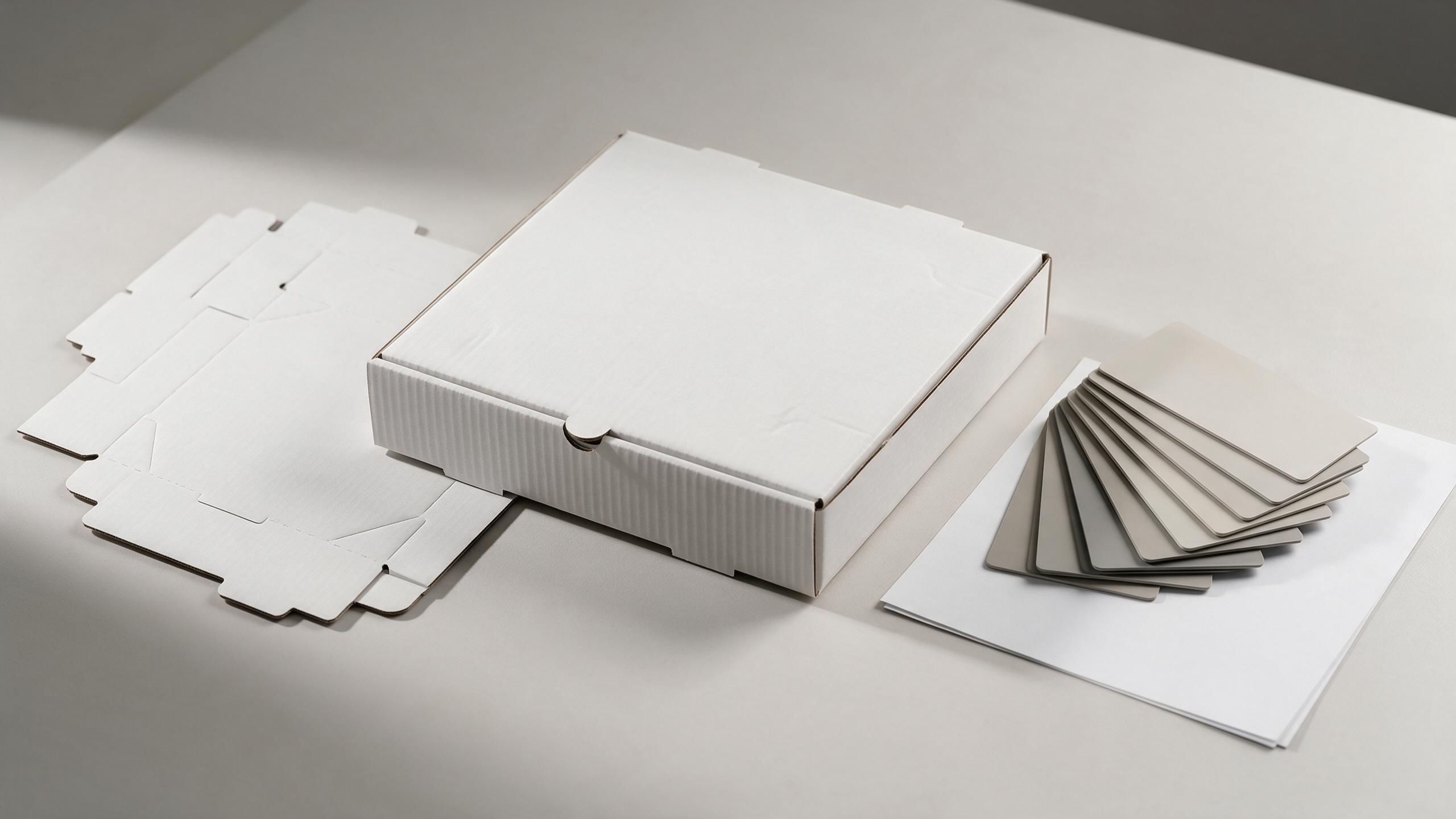
“Pizza box” is not a complete structural description. For personalized pizza boxes, specify the footprint, finished height, lid style, locking method, and any functional details such as ventilation, liner use, or carry features. The key question is how the box behaves after it is folded, loaded, closed, stacked, and handed to the customer.
Corrugated board has flutes that trap air, which can support insulation. At the same time, delivery packaging may need a considered approach to venting so moisture is less likely to build up around the crust. The right balance depends on the pizza, hold time, route, and local operating process; it should be assessed during sampling rather than stated as a universal result.
Structure questions to answer before a quote
- What are the internal length, width, and usable height required for the finished food?
- Does the lid need a front tuck, side locks, or another closure arrangement?
- Will the box be opened at point of sale, carried by one hand, or stacked during delivery?
- Are ventilation openings acceptable for the brand artwork and the foodservice workflow?
- Which board appearance is preferred—such as white or kraft—and does the visual treatment need to cover one panel or several?
- What sample checks will confirm fit, closing behavior, stackability, print placement, and real delivery handling?
Keep artwork and dieline approval connected
A dieline is the bridge between visual design and the finished carton. Ask for the confirmed layout before final art release, then map the artwork to that layout. During review, check the bleed, safe areas, fold lines, cut lines, lock tabs, and the readable orientation of every panel. Keep a version number on both the dieline and artwork file so there is no uncertainty about which pair was approved.
This shared information is often where B2B packaging projects break down: purchasing has a size note, the designer has a flat graphic, and the supplier has a separate folding assumption. A compact approval sheet—showing dimensions, board direction, closure, artwork version, and sample comments—gives all parties one reference.
Use a product reference without assuming unconfirmed features
For a starting point, review the product page for the White Corrugated Pizza Box for Custom Takeaway and Delivery Service. Use it to begin a discussion about the intended takeaway and delivery application, then confirm the exact size, board specification, printing scope, and structural requirements for the project. The product reference does not replace a project-specific brief or sample approval.
Personalized Pizza Boxes: 35-Point Handoff Check
Use the following short labels to make sure the working brief is complete before the supplier prepares a final dieline or sample.
Product and size
- Brief field: finished pizza diameter
- Brief field: maximum loaded height
- Brief field: slice count
- Brief field: crust clearance
- Brief field: single or multi-pizza order
- Brief field: liner or insert requirement
- Brief field: target delivery route
Artwork control
- Brief field: approved logo file
- Brief field: print-side map
- Brief field: color reference
- Brief field: lid artwork priority
- Brief field: side-panel artwork priority
- Brief field: required operational text
- Brief field: QR-code proof size
Structure control
- Brief field: internal length and width
- Brief field: finished sidewall height
- Brief field: lid closure method
- Brief field: lock-tab clearance
- Brief field: fold-line safe areas
- Brief field: glue-area exclusion
- Brief field: ventilation decision
Delivery and approval
- Brief field: stacking pattern
- Brief field: dispatch hold time
- Brief field: carrying method
- Brief field: white or kraft direction
- Brief field: board specification request
- Brief field: sample fit check
- Brief field: sample closure check
- Brief field: sample stacking check
- Brief field: sample print-placement check
- Brief field: dieline version number
- Brief field: artwork version number
- Brief field: target-market review
- Brief field: final approval owner
Send a supplier-ready checklist
When the initial brief is complete, package the information in one email or project sheet. The most useful version includes the brand files, a panel-by-panel artwork plan, a dimensional drawing or pizza specification, the expected delivery conditions, estimated order quantity, target market, and questions that still require supplier confirmation.
For personalized pizza boxes, this preparation does not guarantee that every print or structure choice is suitable. It does make the next step concrete: the supplier can return a dieline, clarify missing fields, and prepare a sample path based on the actual foodservice use case. In practice, the most useful brief is the one that makes unknowns visible early—before production artwork and structure are treated as final.