 EN
How Online Sellers Can Choose Plastic Shipping Bags for Different Order Types
For an online seller, a mailer is not a generic supply item. The right plastic shipping bags depend on what is inside, how consistently it is packed, and what may happen between the fulfillment table and the customer’s door. A soft T-shirt order, a multi-item bundle, a return shipment, and a rigid accessory can all need different packaging decisions—even when they leave the same warehouse.
From a B2B purchasing perspective, it helps to compare the whole order profile rather than the bag’s unit cost alone. Fit, product compressibility, surface protection, dispatch speed, and the consequence of damage should sit on the same checklist. Industry shipping guidance commonly positions flexible mailers as a practical option for many soft, non-fragile items; once an item becomes rigid, pointed-edged, or damage-sensitive, the packaging plan needs more protection.
Start with the order profile, not a stock plastic shipping bag size
Custom poly mailers work most effectively when their dimensions and features are tied to a repeatable order type. Begin by grouping orders according to the packed product, not the catalog category. Record the packed length, width, and realistic filled height, then note whether the item can flex or compress without being harmed. This is more useful than measuring a folded garment or an empty bag.
Filled dimensions also matter when a shipping provider applies dimensional-weight rules. The goal is not to make a parcel look as small as possible; it is to avoid excess empty space that can make labeling, handling, and storage less efficient. Leave enough room for a clean seal and any required packing slip, but avoid a format that lets the product slide or bunch excessively.
| Order type | What to assess first | Typical bag direction |
|---|---|---|
| Single soft-goods order | Folded size, fabric sensitivity, label area | Lightweight self-seal mailer sized close to the packed footprint |
| Multi-item bundle | Combined thickness, shifting, seal clearance | Wider or gusseted format; test whether a mailer still controls movement |
| High-value apparel or presentation order | Scuffing, moisture exposure, unboxing expectations | Mailer plus an inner protective layer or a more structured outer pack |
| Rigid, fragile, or pointed-edged item | Crush risk, puncture risk, edge pressure | Use a protective insert or a box instead of relying on a flexible bag alone |
| Returnable order | Second closure, customer instructions, reverse-logistics handling | Dual-seal or return-ready configuration after real-world testing |
Match plastic shipping bags to the product’s transit risk
The key question is not “Are plastic shipping bags strong enough?” It is “What could damage this exact order during normal handling?” Soft clothing and flexible accessories usually tolerate a lightweight mailer differently from a boxed cosmetic set, a framed print, or an item with pointed hardware. A plastic shipping bag can help shield a suitable product from dust and incidental moisture, but it does not supply the compression resistance of a carton.
Move up the protection scale when the product can be crushed, bent, punctured, or marked by another item in the parcel. For bundled orders, check whether the items create corners or concentrated pressure points after the bag is sealed. A trial pack-and-drop review with the actual product mix is more reliable than choosing thickness from a specification sheet alone.
There is also a total-cost tradeoff. A lower-cost bag may appear attractive until replacements, repacking time, customer-service handling, or avoidable product damage are included. In practical purchasing, transport protection and fulfillment labor can change the initial decision more than a small per-unit price difference.
Choose plastic shipping bag closures for your fulfillment process
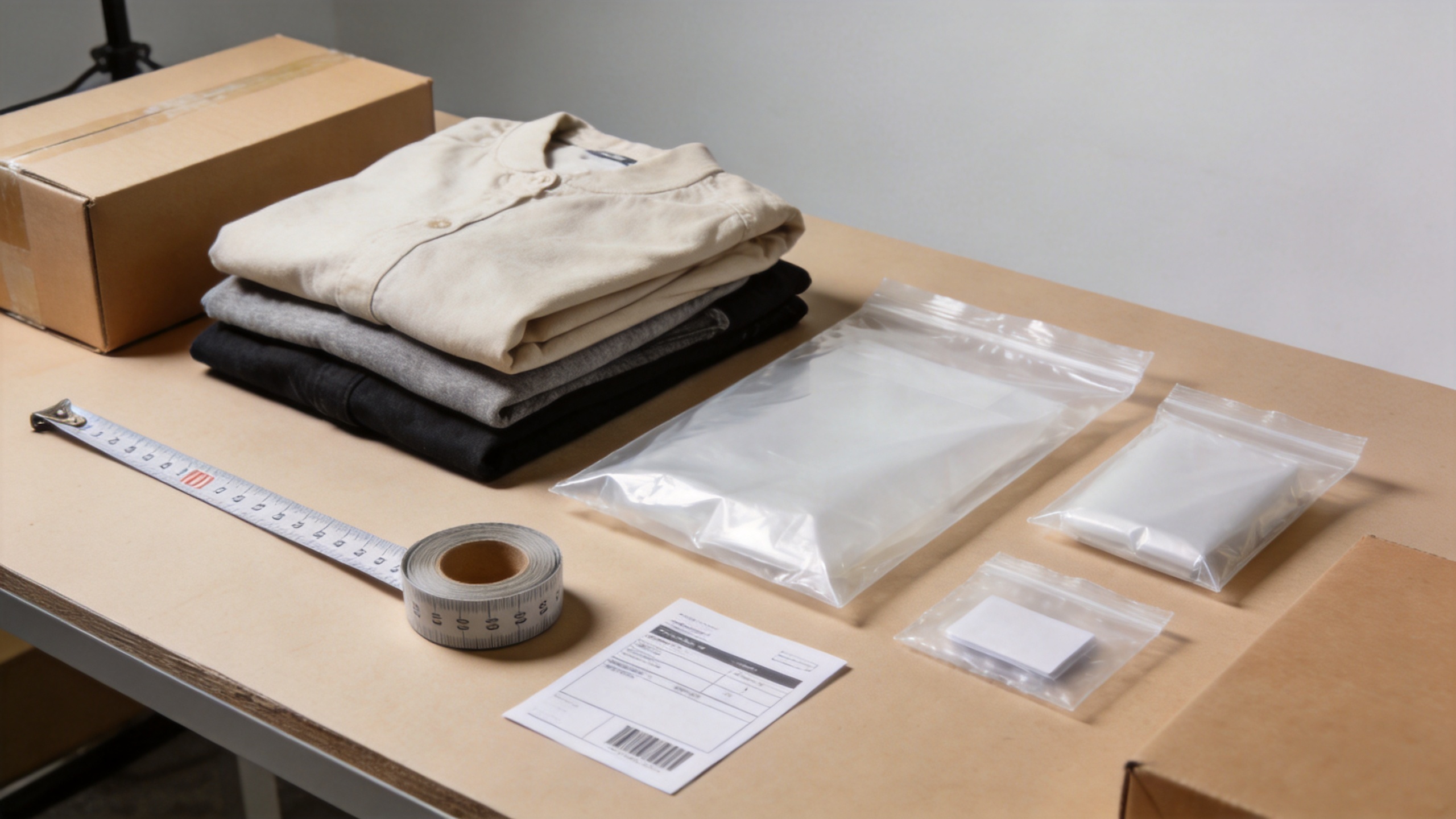
For fast-moving single-item orders, a self-seal closure can simplify the packing station. The decision should still account for who seals the bag, how often the order mix changes, and whether the label placement remains readable after filling. A closure that works well for a thin garment may be less convenient for a bulky bundle that uses most of the bag’s available depth.
For returns, consider whether the customer needs a second usable seal and a clear instruction point. For subscription or repeat shipments, standardizing a small number of mailer formats can reduce picking errors—but only after the formats have been validated against real packed orders. A common operational mistake is forcing every SKU into one “universal” bag and then relying on tape, filler, or manual workarounds at the packing bench.
- Set a standard packing method for each high-volume order group.
- Define how much seal clearance the packer needs after the item is inside.
- Check label placement, scan visibility, and packing-slip placement before bulk purchase.
- Test the intended workflow during a busy fulfillment period, not only with a sample at a desk.
Specify plastic shipping bags by size, material, and design
A useful purchasing brief for plastic shipping bags includes more than length and width. Add the packed product dimensions, expected order quantity, product weight range, required seal style, label area, color or printing requirements, and destination markets. This lets the supplier discuss a packaging format against an actual use case instead of a vague request for “mailer bags.”
For sellers evaluating a recycled-content option, the appropriate discussion is still order-specific: confirm the material description, sample the filled bag, and verify the end-of-life communication needed for each target market. Material claims and local collection systems vary, so they should not be treated as a universal outcome. What matters here is a clear specification, a realistic packing test, and language that matches the available evidence.
If your order profile is suitable for a flexible mailer, review the available Recycled Poly Mailer product page as a starting point for a supplier conversation. Confirm dimensions, material details, artwork, and the final packed application before placing a larger order.
A purchase checklist for plastic shipping bags
Before selecting a format, ask the same questions for every order group:
- What are the dimensions and weight of the product after it is folded, wrapped, or bundled?
- Can the contents safely flex, or do they need compression resistance from an insert or box?
- Could corners, hardware, or multiple items puncture the bag during handling?
- How much space is needed for a dependable seal, shipping label, and packing information?
- Does the order require a return closure or a particular customer-facing presentation?
- Which target market will receive the package, and which packaging claims or disposal instructions need local verification?
- Has the proposed configuration been tested with real products and the normal fulfillment workflow?
Build a simple specification for each mailer group
Use plastic shipping bags as a named packaging category in your purchasing sheet, then define the exact version used for each order group. For single soft-goods orders, plastic shipping bags should be matched to the folded footprint and the available sealing area. For bundles, plastic shipping bags need enough width and depth to keep items from forcing the seal or creating stress points.
For premium orders, plastic shipping bags may work as an outer moisture barrier around an inner presentation layer. For return programs, plastic shipping bags should be reviewed for a second closure and easy customer instructions. For rigid goods, plastic shipping bags are only part of the solution when an insert or carton supplies the needed shape protection.
When comparing quotes, ask suppliers to describe the material, finished dimensions, closure, print area, packing quantity, and sample process for the proposed plastic shipping bags. That turns a general request into a configuration a warehouse team can actually test. It also makes it easier to compare plastic shipping bags across suppliers without losing the order conditions that matter.
- Assign plastic shipping bags by packed order profile, not only by product name.
- Keep a tested size range for plastic shipping bags at each packing station.
- Record when plastic shipping bags require an inner sleeve, filler, or carton.
- Review plastic shipping bags again when product dimensions or order composition change.
Make the final choice from a tested order matrix
The most useful plastic shipping bags are the ones that fit a defined order type, not the ones that promise to cover every shipment. Create an order matrix with a few repeatable categories: soft single items, bundles, premium presentation orders, returnable shipments, and products that need a box. Then assign each category a tested package format and document the exceptions.
The result is a clearer path from product data to a purchasing decision. It also makes conversations with a packaging supplier more productive: instead of comparing a generic bag, you can share the packed dimensions, transit risk, fulfillment needs, and market requirements that determine whether a custom poly mailer is the right choice.