 EN
Compostable vs Recycled T-Shirt Bags: Which Is Better for Retail?
For retailers, choosing tshirt bags is no longer just a question of size, color, and unit price. A bag has to work at the checkout counter, fit the merchandise, support the store’s positioning, and make sense in the market where it will be distributed. When the choice is between compostable and recycled-content options, the most useful question is not “Which is greener?” It is: which end-of-life route and purchasing model can this store genuinely support?
This comparison focuses on two familiar retail options: compostable t-shirt bags designed for an appropriate composting route, and plastic t-shirt bags made with recycled content. Both can have a place in sustainable ecommerce packaging and physical retail operations, but they solve different problems. The right answer depends on local collection access, the bag’s documented material specification, carrying requirements, claim language, and how customers will be guided after use.
Start with the retail decision, not the label
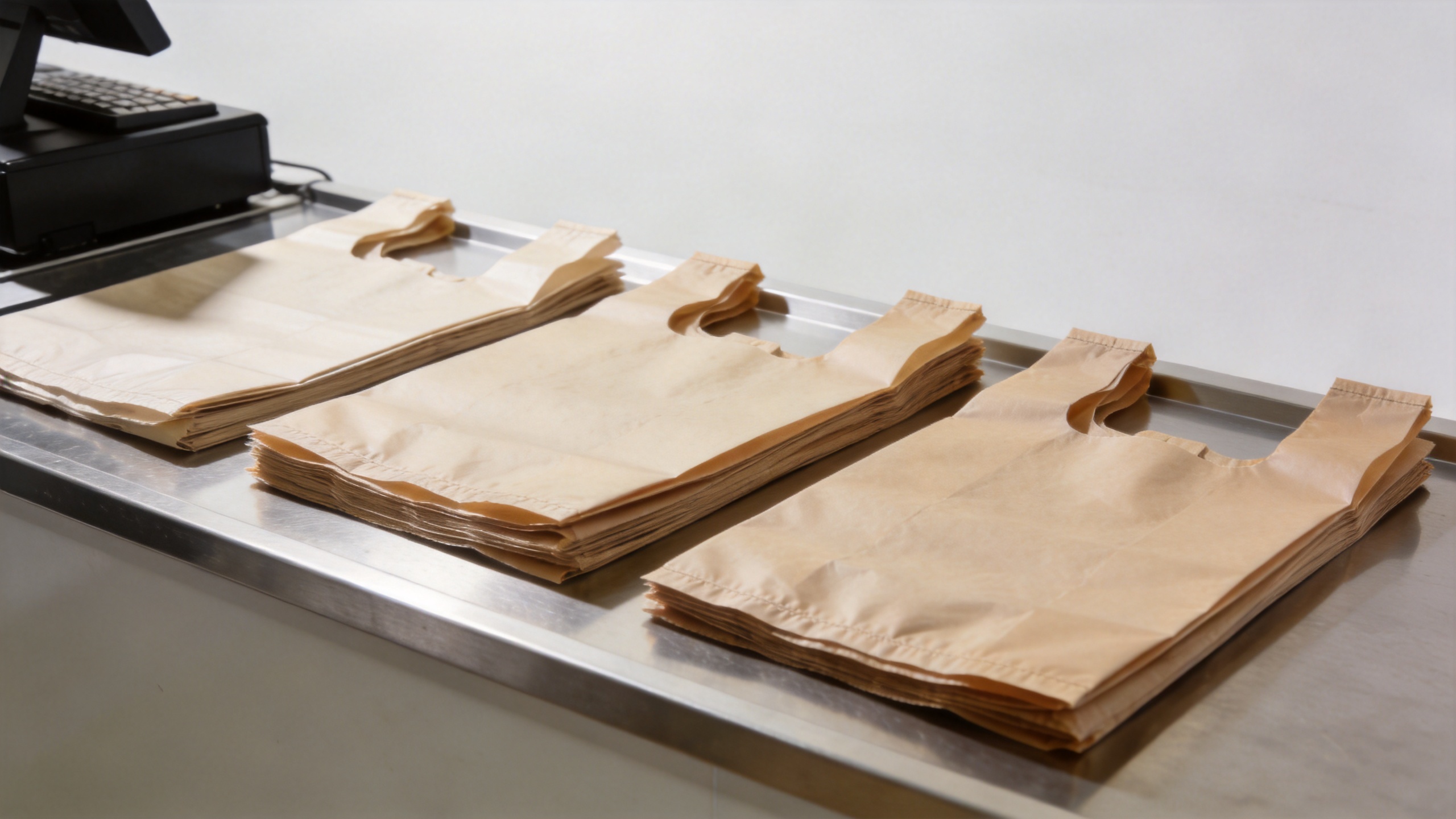
Tshirt bags are popular because they are quick to dispense, easy to carry, and efficient to store. Those operational strengths still matter. A compostable option may align with an organics-focused program, while a recycled-content option may suit a retailer that wants to reduce reliance on virgin resin while retaining a familiar bag format. Neither label removes the need to assess checkout volume, product weight, moisture exposure, merchandising needs, and disposal instructions.
From a retail-use perspective, the decision should return to four realities: what the bag must carry, what customers are likely to do with it, what systems exist locally, and what the supplier can document. In other words, material choice is only one part of the brief.
How compostable tshirt bags fit retail programs
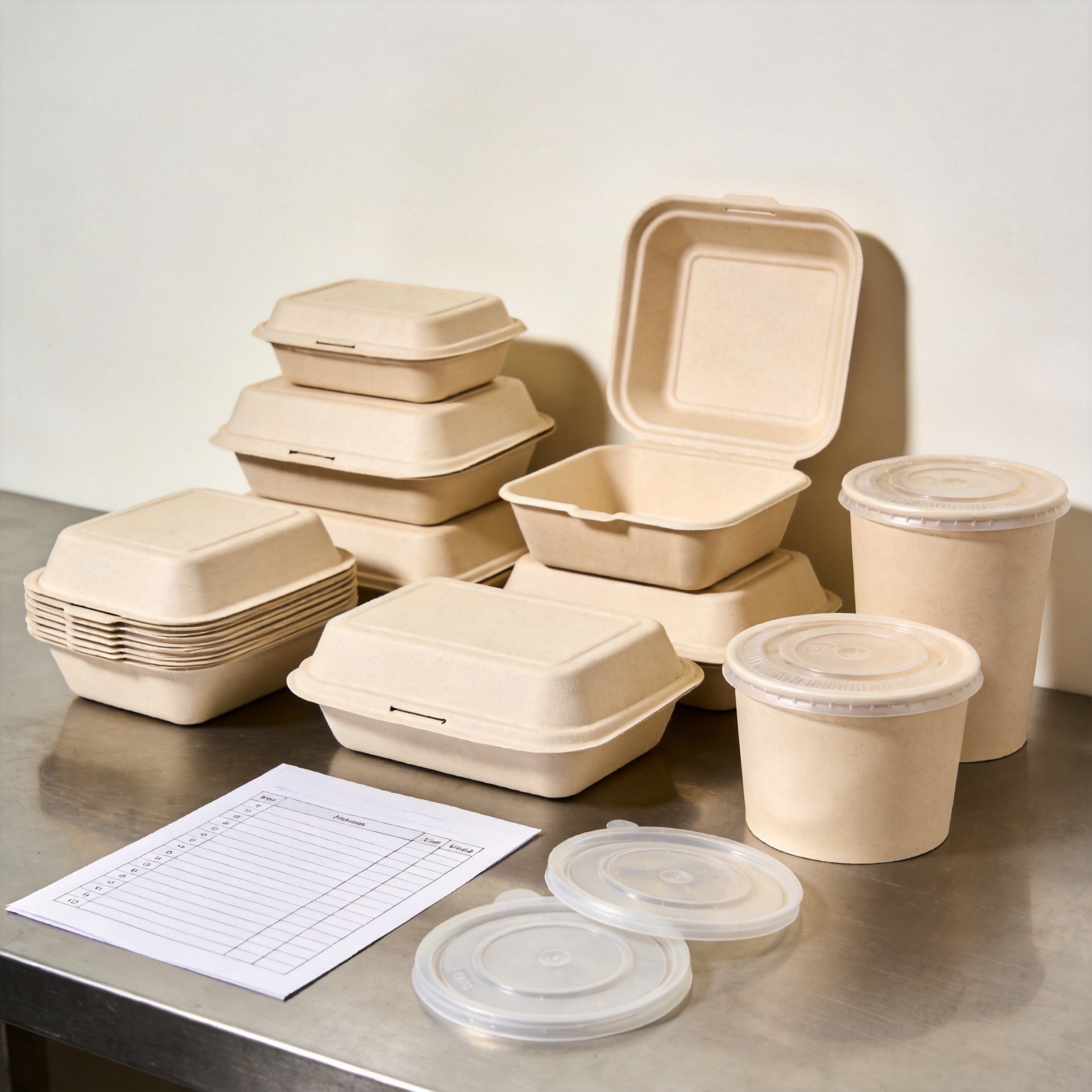
Compostable tshirt bags are generally considered when a retailer wants the bag’s intended end-of-life route to be organics collection or an appropriate composting facility. That route can be meaningful in a defined program, especially where the retailer, municipality, or customer base has clear access to accepted composting services. It is not a universal disposal solution.
For claim language, the boundary matters. The FTC Green Guides say a compostable claim should be supported by competent and reliable scientific evidence, and a claim may need a clear qualification when appropriate facilities are not available to a substantial majority of the communities where the item is sold. A retailer should therefore avoid treating “compostable” as a shorthand for “suitable for every home bin or every market.” Ask the supplier for the applicable test documentation, the intended composting conditions, and the exact wording permitted for the target market.
Compostable bags can be a stronger fit when:
- the retailer serves a market with a known, appropriate organics route;
- store messaging can clearly explain where the bag should go after use;
- the use case is compatible with the specified material and handling conditions; and
- the procurement team can retain evidence for the compostability claim rather than relying on a generic green symbol.
One practical lesson is to ask about the final collection route before selecting the material. A bag that is designed for composting but is routinely placed in a conventional recycling stream can create confusion rather than a clear outcome.
How recycled-content tshirt bags fit retail programs
Recycled-content tshirt bags take a different approach. Their key sustainability discussion is about feedstock: some portion of the bag is made from material recovered from the waste stream rather than entirely from virgin resin. For many retailers, this can be easier to connect with existing checkout operations because the bag format remains familiar and the choice does not depend on customers having access to a composting route.
However, “recycled content” is not the same as “recyclable everywhere.” The FTC Green Guides also caution that marketers should not misrepresent the amount or percentage of recycled content. If only part of a package contains recycled material, the claim needs to make that scope clear. Procurement teams should request the recycled-content percentage, whether the figure is post-consumer, pre-consumer, or combined, and the basis on which it is calculated.
A recycled-content option can be a stronger fit when:
- the retailer needs a familiar carry-out format for broad daily use;
- the immediate goal is to reduce virgin-material use with a documented percentage;
- local recycling access, bag rules, and labeling expectations have been checked for the selling market; and
- the retailer can communicate the claim precisely without implying a disposal route that has not been verified.
Looking beyond a single-bag price is useful here. The bag’s strength requirements, case configuration, checkout speed, storage footprint, artwork, and claim-review work can all change the actual purchasing impact.
A retail comparison: compostable vs recycled-content bags
| Decision factor | Compostable t-shirt bags | Recycled-content t-shirt bags |
|---|---|---|
| Primary sustainability focus | Intended composting route under specified conditions | Reduced use of virgin material through documented recycled content |
| Key question to verify | Will the relevant composting system accept this bag? | What percentage and type of recycled content is documented? |
| Customer communication | Explain the accepted composting route and any limitations | State recycled-content scope; do not imply universal recyclability |
| Typical retail fit | Programs with a clear organics pathway and controlled messaging | Retailers prioritizing familiar operations and a verified recycled-content specification |
| Main risk | Assuming compostability means home-compostable or universally accepted | Using a broad environmental claim without percentage or local-pathway clarity |
This comparison is deliberately conditional. The same design can perform differently across markets because collection systems, bag regulations, and customer habits differ. For cross-market retail projects, document the target country or region before finalizing the claim artwork.
Use a purchase checklist before choosing tshirt bags
A useful comparison-stage purchase process combines performance and sustainability questions instead of treating them as separate workstreams:
- Define the bag’s job. List merchandise types, expected weight, number of items per transaction, moisture exposure, and whether the bag will also support delivery or click-and-collect orders.
- Confirm the target market. Check applicable bag restrictions, collection pathways, and labeling requirements in the specific region where the bags will be sold.
- Request material evidence. For compostable bags, request the relevant test or certification documentation and intended composting conditions. For recycled-content bags, request the percentage, material basis, and source classification.
- Review the claim as printed. The customer sees the bag, not the purchasing file. Make sure the wording distinguishes a sourcing claim from an end-of-life claim and includes clear qualifications where needed.
- Test operational fit. Evaluate samples at the counter: dispensing, carrying comfort, seal or handle behavior, product fit, and storage efficiency.
- Plan the customer instruction. If correct disposal depends on a local route, make that next step clear rather than relying on a symbol alone.
This framework also supports sustainable ecommerce packaging planning. Online and omnichannel retailers may need to separate the requirements for in-store carry-out bags from shipping bags, return packaging, and fulfillment materials instead of assuming one format will serve every channel.
Fast sample tests for tshirt bags
Before a rollout, use the same test basket and checkout routine for each candidate. These short comparisons keep tshirt bags tied to real retail use rather than a label alone:
- Load tshirt bags with a typical basket; check whether tshirt bags remain comfortable to carry.
- Dispense tshirt bags at normal speed; observe whether tshirt bags separate consistently.
- Store a case of tshirt bags near checkout; confirm that tshirt bags fit the available space.
- Review printed instructions on tshirt bags; ensure tshirt bags state the intended disposal route clearly.
- Compare samples of tshirt bags after normal handling; see how tshirt bags suit the merchandise mix.
- Check claim artwork with the supplier; document the material evidence behind it.
- Trial samples across busy periods; ask staff whether they slow the checkout workflow.
- Set a reorder specification that retains the agreed material evidence.
Which option is better for retail?
Compostable tshirt bags are often the better choice when a retail program has a verified composting pathway, can support clear disposal communication, and needs a material story tied to that pathway. Recycled-content tshirt bags are often the more practical choice when the retailer needs a conventional, efficient carry-out format and can substantiate the recycled-content percentage without overstating recyclability or local recovery access.
For many buyers, the answer is not one permanent winner. A grocery-oriented operation with access to organics collection may make a different choice from a boutique, a regional chain, or an online seller using bags in multiple markets. The more useful approach is to compare the full set of conditions, not only the bag material.
When you are ready to review bag dimensions, artwork, and market-specific requirements, see our Compostable T-Shirt Bag page as a starting point for a product discussion. Bring the target market, expected use, and documentation requirements into the conversation so the selected tshirt bags match both the retail operation and the intended claim.