 EN
A Checklist for Ordering Food Delivery Packaging in Bulk
Ordering food delivery packaging in bulk is not simply a matter of choosing the lowest box price. The right order has to work at the pass, inside a delivery bag, and in the customer’s hands. A B2B purchasing review should therefore bring menu fit, pack-out speed, transport stability, brand requirements, and reorder planning into one decision.
For foodservice buyers, a practical rule is simple: approve a packaging format only after it has passed the conditions it will face in actual service. A container that looks suitable on a supplier sheet may behave differently when it holds a saucy entrée, sits beside a cold drink, or travels under other orders. This checklist helps purchasing teams ask the right questions before committing to a larger volume of food delivery packaging.
Start with the menu, not the container catalogue
Build a short test list around the dishes that create the most delivery risk. Include hot mains, liquid or saucy dishes, crisp foods, cold items, and multi-item meals. Record portion size, food temperature at packing, sauce volume, likely delivery duration, and whether the item is stacked with other orders. These inputs turn a broad search for food delivery packaging into a usable specification.
- Does the internal capacity leave enough headspace for lids and movement?
- Does the chosen shape fit the food without crushing toppings or letting liquids travel?
- Should hot and cold components be packed separately?
- Will moisture-sensitive items need ventilation rather than an airtight format?
- Which parts of a meal need separate containers, lids, cups, or seals?
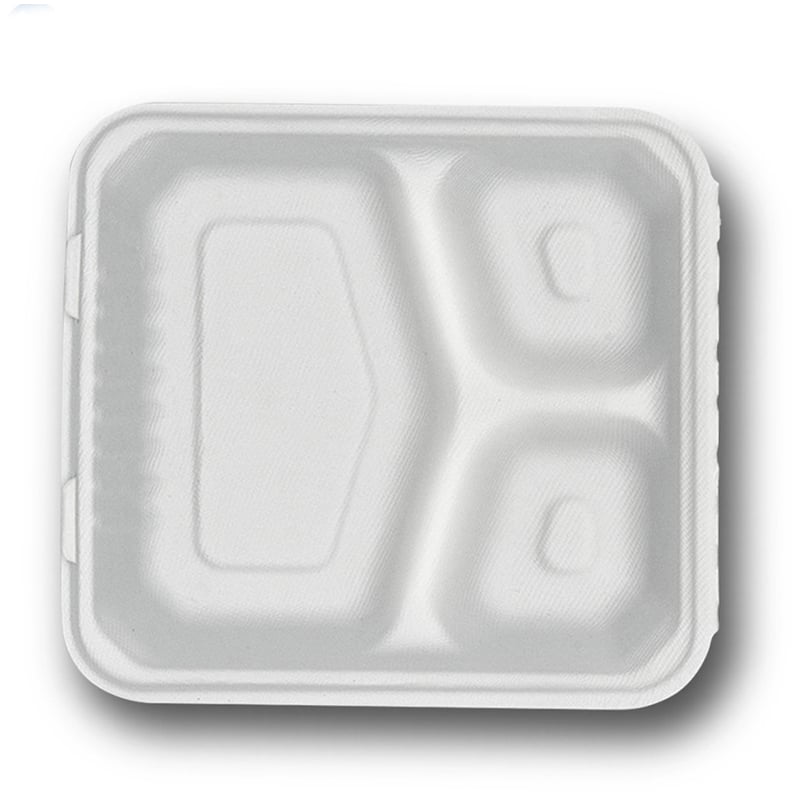
Write these answers beside every SKU. It is easier to compare supplier options when the team agrees on the use case first. For compartmented meal applications, a relevant category to review is Sugarcane Compartment Meal Boxes; confirm the final dimensions, lid arrangement, and meal fit with the supplier before ordering.
Check material, capacity, and lid compatibility as one system
Foodservice takeaway packaging should be evaluated as a set, not as isolated pieces. A base, lid, seal, and accessory can each affect the outcome. Ask for the exact material and product specification for the intended application, then confirm the fit between the base and lid using production samples. Do not assume that containers of a similar outline are interchangeable.
For every proposed food delivery packaging format, run a simple fill-and-close test. Use normal serving volumes, close the lid as staff would during a busy service, turn the pack through the angles it may see in transport, and inspect the closure. This does not replace product-specific validation, but it reveals questions that a static product photo cannot answer.
If the order will serve a regulated market, make food-contact documentation a request item rather than an implied promise. U.S. Food and Drug Administration guidance treats packaging and its components as food-contact substances; the documentation needed depends on the material, intended use, and market. Ask suppliers to identify the documents available for the exact product and confirm their relevance with the appropriate local requirements.
Test the delivery journey before approving bulk quantities
The strongest bulk-order decision is based on a realistic pack-out trial. Put filled containers into the delivery bags and stacking pattern your operation actually uses. Include the heaviest meal, a liquid-containing item, and any beverage or sauce cups. Then examine the order at handoff and after a representative route or handling simulation.
| Check point | What to observe | Why it matters |
|---|---|---|
| Closure | Lid alignment, seal engagement, and leaks after movement | Helps identify whether the container-and-lid combination is appropriate for the menu item. |
| Stacking | Movement, compression, and stability in the delivery bag | Reduces surprises when multiple orders are carried together. |
| Food condition | Steam, moisture, temperature changes, and separation of hot/cold items | Supports menu-specific packaging choices rather than one-size-fits-all buying. |
| Staff handling | Speed of opening sleeves, filling, closing, and labeling | Shows whether the format supports peak-period operations. |
It is tempting to treat a successful tabletop test as enough. In practice, bag space and stacking often change the result. Capture observations in a short test record so that the person placing the repeat order has more than memory to rely on.
Define what custom printed food packaging must accomplish
Custom printed food packaging can help a delivery order look more consistent, but printing should follow the functional decision, not lead it. First confirm the container size, material, printable area, artwork format, color expectations, and any required operational markings. Then ask how the design will be approved before mass production.
- Is the artwork sized for the confirmed packaging format?
- Which surfaces are intended for print, and which areas must remain clear for seals or labels?
- What minimum order quantity, lead time, proof process, and repeat-order process apply?
- Will a change in box size, material, or lid alter the artwork requirement?
Keep a version-controlled artwork file and identify the SKU it belongs to. This small step prevents an avoidable mismatch between a custom printed food packaging design and the packaging ultimately ordered.
Compare total operating cost, not only the per-piece quote
The lowest unit price can be misleading if the option requires extra bags, wrap, seals, or replacement packs. Compare the full order cost alongside the operational effects of the packaging. Include container and lid, accessories, packing labor, storage footprint, incoming freight, expected waste, and the cost of poor fit or damage. A slightly different food delivery packaging configuration may be easier to pack and may reduce the need for extra protective layers.
Also decide how many SKUs the menu truly needs. More formats can improve menu fit, yet they can complicate storage and replenishment. A sensible bulk order balances enough variation for the menu with a manageable stock list for the team.
Prepare a supplier-ready bulk-order brief
Before requesting final pricing, put the decision into a clear brief. This improves quote comparability and makes sample approval more meaningful. Your brief should include:
- Each menu item or meal group and its required capacity or dimensions.
- Expected order quantity, order frequency, and preferred shipment timing.
- Material and food-contact documentation questions for the destination market.
- Container, lid, cup, cutlery, bag, and seal requirements as applicable.
- Delivery-test criteria: leakage, stacking, food condition, and staff handling.
- Printing requirements for custom printed food packaging, including artwork, proof approval, and reorder controls.
- Storage limits, carton preferences, and labeling needs.
Finally, agree on what has to be confirmed before the production order: final sample, specification sheet, print proof, quantity split, lead time, and shipping arrangement. This turns a bulk purchase into a repeatable procurement process instead of a one-off guess.
Use the checklist again before every reorder
Menus change, delivery patterns shift, and new items may introduce different packaging risks. Reuse the checklist before a major reorder and ask what changed: portions, sauces, delivery radius, customer feedback, storage space, branding, or destination-market requirements. A strong food delivery packaging program is reviewed as the operation changes, with each decision tied back to actual menu and delivery conditions.