 EN
How to Choose Leak-Proof Takeaway Boxes for Food Delivery
For a foodservice buyer, selecting takeaway boxes is not simply a material decision. A box can look neat on a counter and still fail when hot food, sauce, condensation, stacking pressure, and a thirty-minute delivery route all happen at once. The most useful way to compare takeaway boxes is to begin with the food and delivery path, then work back to the container shape, lid fit, compartments, and validation process.
From a packaging-engineering perspective, “leak-proof” should be treated as a performance question, not a label. The right takeaway boxes for dry rice bowls may be different from the right choice for curry, soup-adjacent dishes, or meals with separate cold and hot components. This guide gives restaurant groups, caterers, distributors, and brand buyers a practical checklist for making that distinction.
Start with the food, not the container material
Before comparing takeaway boxes, list the menu items that create the highest delivery risk. Thin liquids, oily sauces, gravies, dressings, and steam-heavy foods put different demands on a closure. A shallow container may work well for a dry entrée but offer too little headspace for a saucy dish. Conversely, an oversized box can let food shift and press against the lid during transport.
- Liquids and sauces: Prioritize a secure lid interface, adequate headspace, and a practical fill line.
- Fried or crisp foods: Balance containment with venting so trapped steam does not quickly soften the food.
- Mixed meals: Check whether separate components must stay apart throughout delivery.
- Hot-and-cold combinations: Consider whether one format is being asked to manage incompatible temperature and moisture needs.
This first pass prevents a common procurement mistake: selecting all takeaway boxes by a single capacity number or unit price. The food’s viscosity, portion weight, temperature, and motion during delivery determine what the closure needs to do.
Evaluate the lid-and-base fit as a system
A container is only as dependable as the connection between its lid and base. When reviewing takeaway boxes, examine the entire rim: its depth, rigidity, corners, locking points, and whether the lid seats consistently without excessive force. Small mismatches can become larger leaks after hot food softens the structure or after stacked boxes apply pressure to the corners.
Ask for samples and test the actual combination you plan to order. Fill the box with the intended food or a representative liquid, close it as staff would during service, tilt it, stack it, and place it in the type of delivery bag used in the field. Formal package-leak methods exist—for example, ASTM F2338 addresses nondestructive package leak detection by vacuum decay—but buyers should not assume a box has passed a particular method unless the supplier provides that evidence. For day-to-day selection, repeatable use-condition trials are often the most relevant first screen.
Also inspect the lid after several open-and-close cycles. A closure that performs once but becomes loose during a busy catering workflow may not be the right option for high-volume takeaway boxes.
Choose compartments for separation, not just presentation
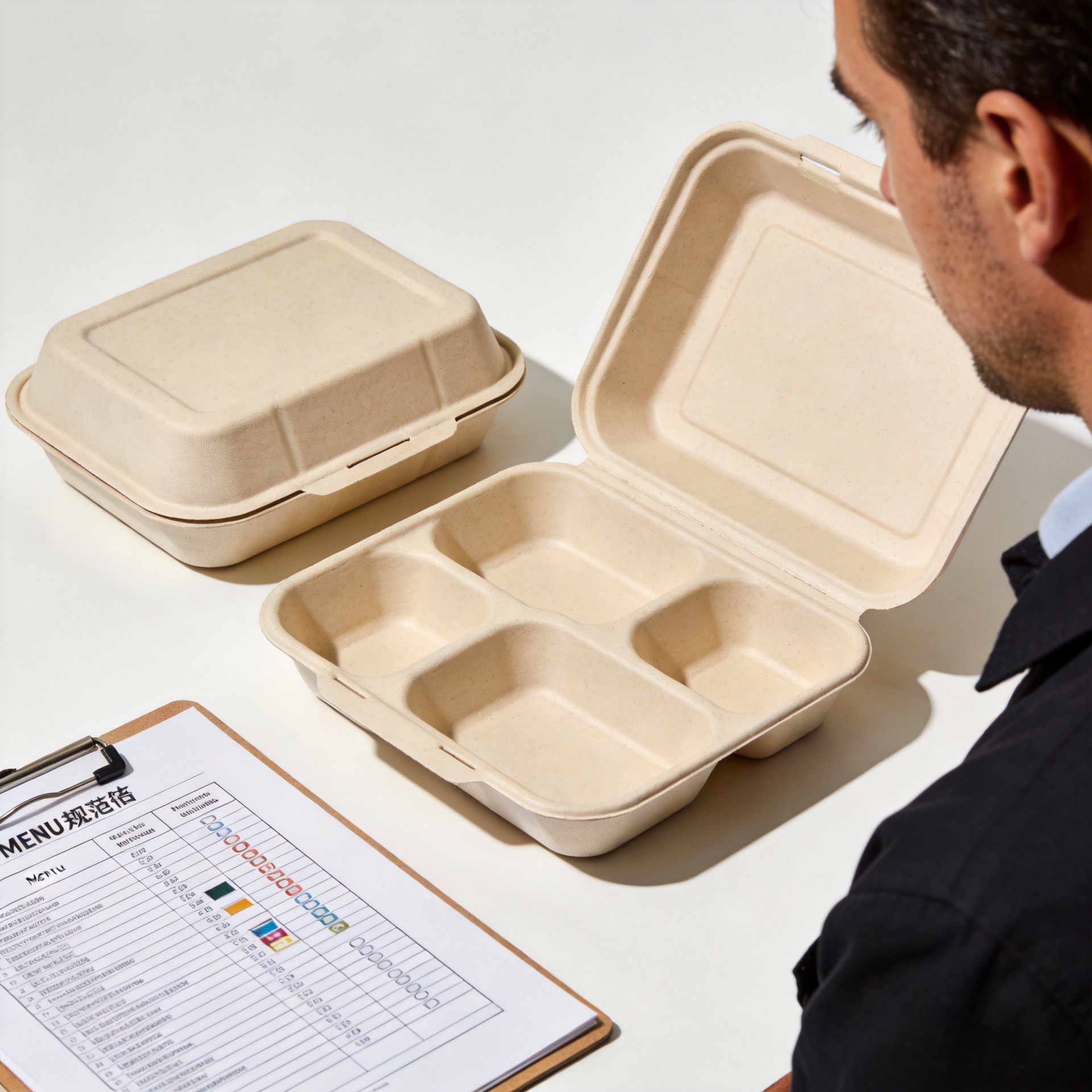
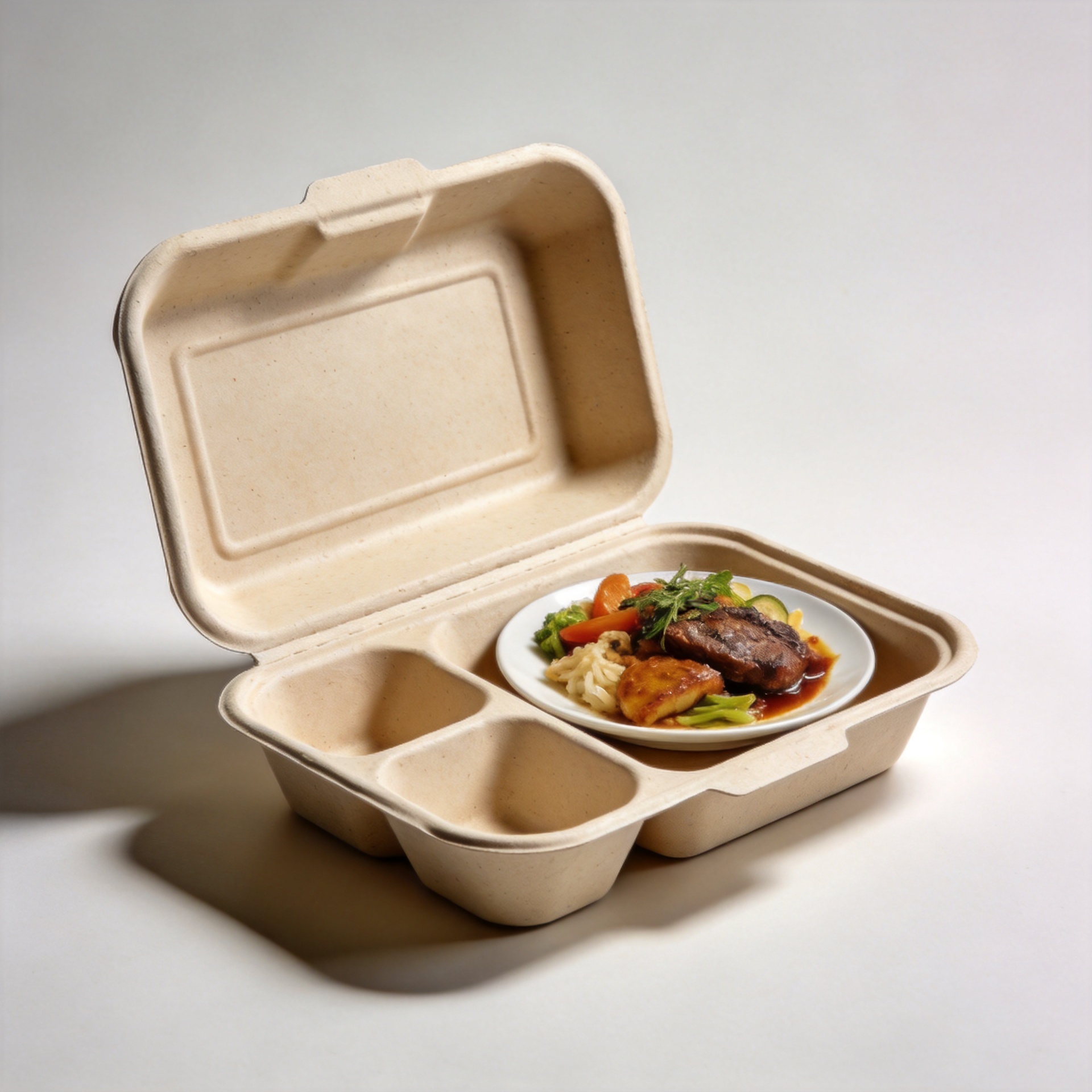
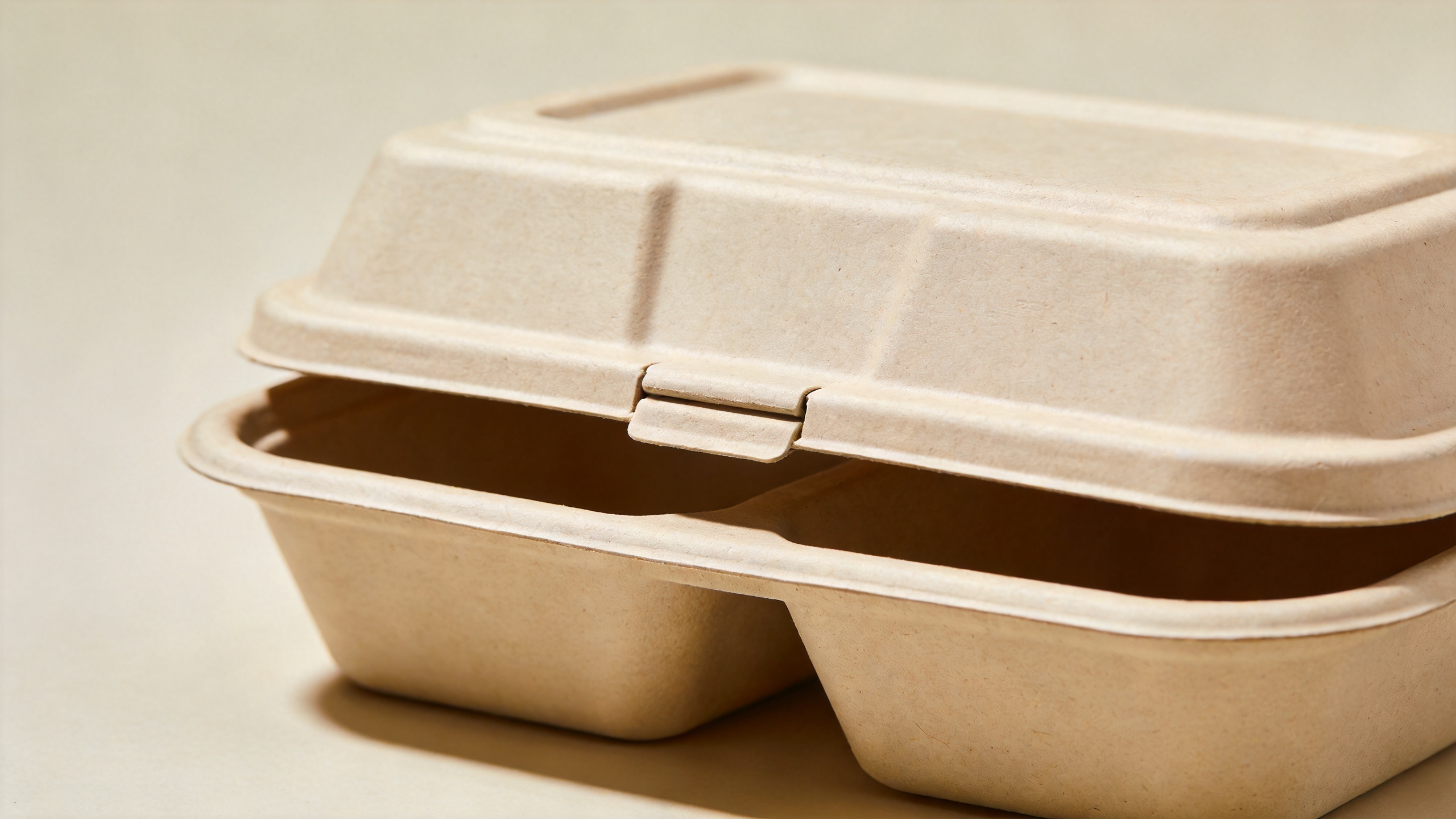
Compartmented takeaway boxes can help keep a meal organized, but the dividers must solve a real food-handling need. A three-compartment format may be useful when a sauce, starch, and side dish should remain separate. It is less useful when a highly fluid sauce can move over or around low dividers as the box tilts.
| Food-service need | What to assess in takeaway boxes | Practical question |
|---|---|---|
| Separate entrée and sides | Divider height and compartment volume | Will portions stay in their zones after stacking? |
| Sauce-heavy meals | Headspace, rim fit, corner stability | Can the container be tilted without reaching the closure? |
| Catering portions | Base stiffness and lid retention | Can filled boxes be carried in layers? |
| Dry or crisp menu items | Moisture-management approach | Will the box create unnecessary condensation? |
For buyers sourcing compostable food containers, it is especially important to distinguish material claims from format suitability. A compostable substrate does not, by itself, guarantee that all takeaway boxes will suit every menu item or delivery duration. Structure and use conditions still matter.
Match size, fill level, and route conditions
Leak control is affected by what happens after packing. Overfilled takeaway boxes leave no buffer under the lid; underfilled boxes may allow food to slide. Long routes, sharp turns, bicycle delivery, and densely packed bags each increase movement and compression. Build these conditions into sampling rather than relying on a flat-table inspection.
A useful trial plan includes three checks: a counter check immediately after sealing, a stacked check after a short hold, and a route simulation that reflects the busiest delivery period. Record which food, fill weight, lid type, and bag orientation were used. That documentation makes it easier to compare takeaway boxes fairly and identify whether a failure came from the format, packing practice, or a menu item that needs a separate solution.
Request evidence appropriate to your sales market
For export and foodservice procurement, ask suppliers what documentation is available for the intended material, market, food-contact conditions, and temperature range. In the United States, FDA information on food-contact substances covers packaging materials and considers intended use conditions such as food type, duration of contact, and heat or cold exposure. That does not mean every container is automatically suitable for every application; it means buyers should align supplier documents with their own destination-market and use-case requirements.
Keep environmental statements equally specific. If the project calls for compostable takeaway boxes, confirm the relevant disposal pathway, local collection realities, and any conditions attached to the claim. Avoid treating “eco-friendly,” “compostable,” and “leak-proof” as interchangeable proof points.
Build a short supplier comparison checklist
- Identify the two or three menu items most likely to leak.
- Set required portion sizes, fill lines, and compartment needs.
- Test each shortlisted format under stacking and route-like conditions.
- Check lid seating at corners, rim continuity, and ease of closing for staff.
- Request food-contact and market-relevant documentation for the intended use.
- Compare total operational impact: breakage, re-packing, complaints, and storage—not only unit cost.
When a divided format fits the menu, buyers can use the product details for Sugarcane Compartment Meal Boxes as one starting point for a sample review. The product link is a sourcing reference, not a guarantee of performance for a particular dish; validate it against the actual menu and route.
Final decision: make leak resistance measurable
The most suitable takeaway boxes are the ones that fit a defined meal, packing routine, and delivery route—not simply the ones with the strongest claim on a catalog page. Start with the food, assess the lid-and-base system, choose compartments with a clear purpose, and run practical trials before scaling an order. This approach helps purchasing teams select takeaway boxes that support cleaner deliveries, more consistent presentation, and fewer avoidable packaging surprises.