 EN
How to Source Compostable Meal Boxes for Catering and Foodservice
For a catering buyer, a catering food package has to do more than look sustainable. It must protect the meal, keep portions organized, travel reliably, fit the service workflow, and support claims your customer can verify. The most useful starting point is not a material ranking. It is a written brief that connects the menu, service temperature, guest count, delivery route, and local end-of-life reality.
This guide gives foodservice teams a practical way to source compostable meal boxes without treating a material name or a green label as a complete purchasing decision. It is written for caterers, meal-prep operators, distributors, and buyers comparing takeaway boxes for recurring or event-based service.
Start with the meal, not the material
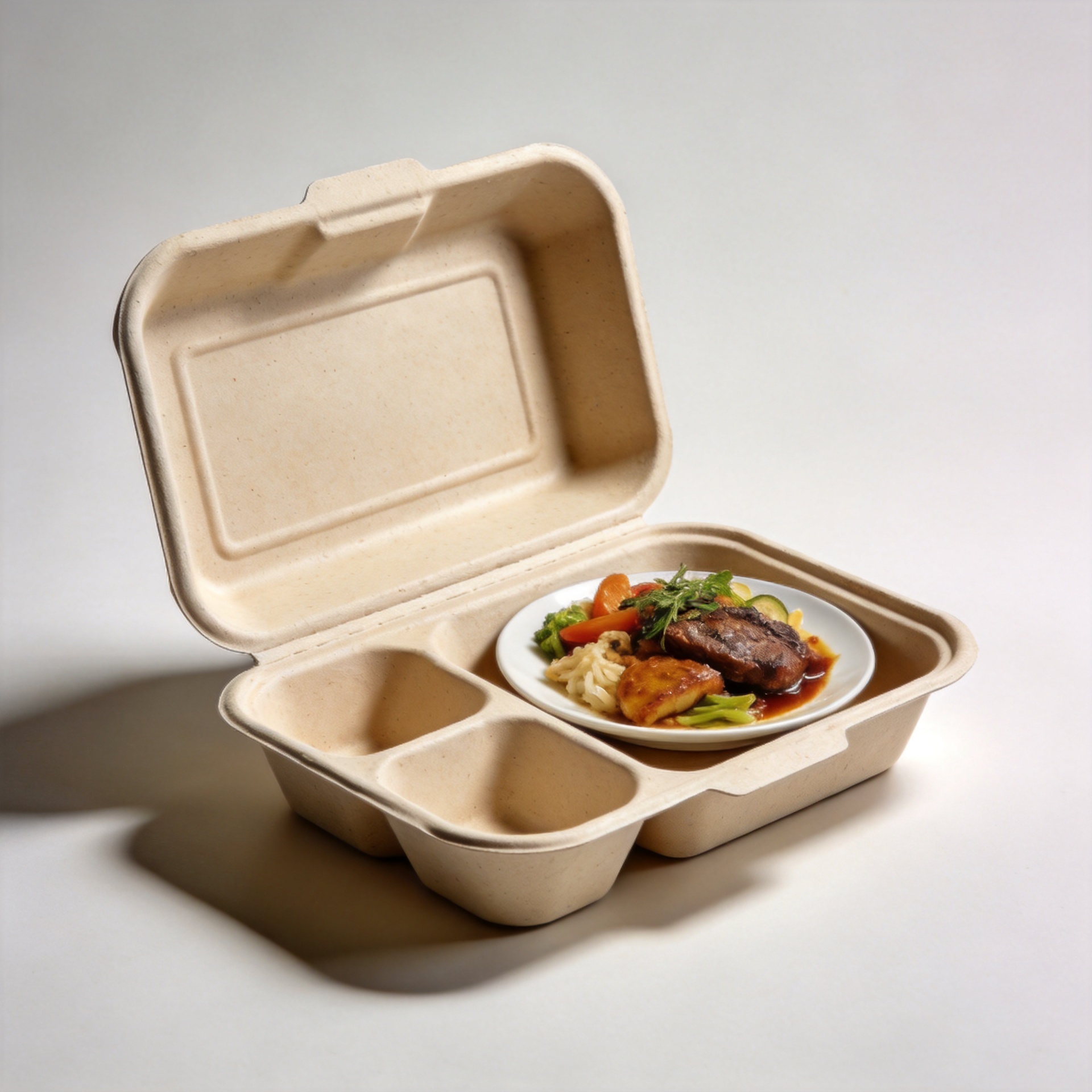
Build the specification around what the box must carry. Record the food’s temperature at packing, expected holding time, sauce level, portion weight, and whether cold and hot components share a tray. A dry sandwich lunch, a sauced rice bowl, and a hot buffet portion can place very different demands on the same catering food package.
- Capacity and compartment layout: Map each compartment to the menu rather than choosing a generic shape first.
- Lid and closure: Test the lid with a fully loaded box, not an empty sample. Check stack stability, opening force, and leakage during normal carrying.
- Heat, moisture, and grease: Ask for use-condition guidance for your actual menu and holding window; do not assume one fiber format fits every dish.
- Service flow: Confirm whether the crew can close, label, stack, and hand off the box at peak speed.
Bring representative food to the sample test. That small discipline exposes issues that a desk-side comparison can miss: a lid that shifts under steam, a compartment that is too shallow, or a stack height that complicates delivery packing. Record which catering food package format was tested, the fill level, and the route conditions so the result can guide the next purchase order.
Turn “compostable” into a verification workflow
Compostability is a condition-based claim, not a promise that every used box will break down wherever it is discarded. Ask the supplier to identify the specific item, material construction, applicable test or certification basis, and the circumstances covered by that evidence. For North American programs, buyers may encounter ASTM D6400 or ASTM D6868 in certification discussions; these standards should be checked against the exact product and target market rather than treated as a universal shorthand.
Then verify the downstream route. Is there a collection and composting program serving the venue or delivery area? Does it accept foodservice packaging of this type? Can the event team separate food scraps and packaging clearly enough to reduce contamination? If the answer is uncertain, describe the item accurately as a product with a compostability claim subject to local acceptance, rather than making an outcome guarantee.
The same discipline applies to food contact. Packaging and its components can fall within food-contact requirements, so request product-specific documentation for the intended foods, temperatures, contact duration, and destination market. A supplier’s general statement is not a substitute for a buyer’s market-specific review.
Compare samples as a catering food package system
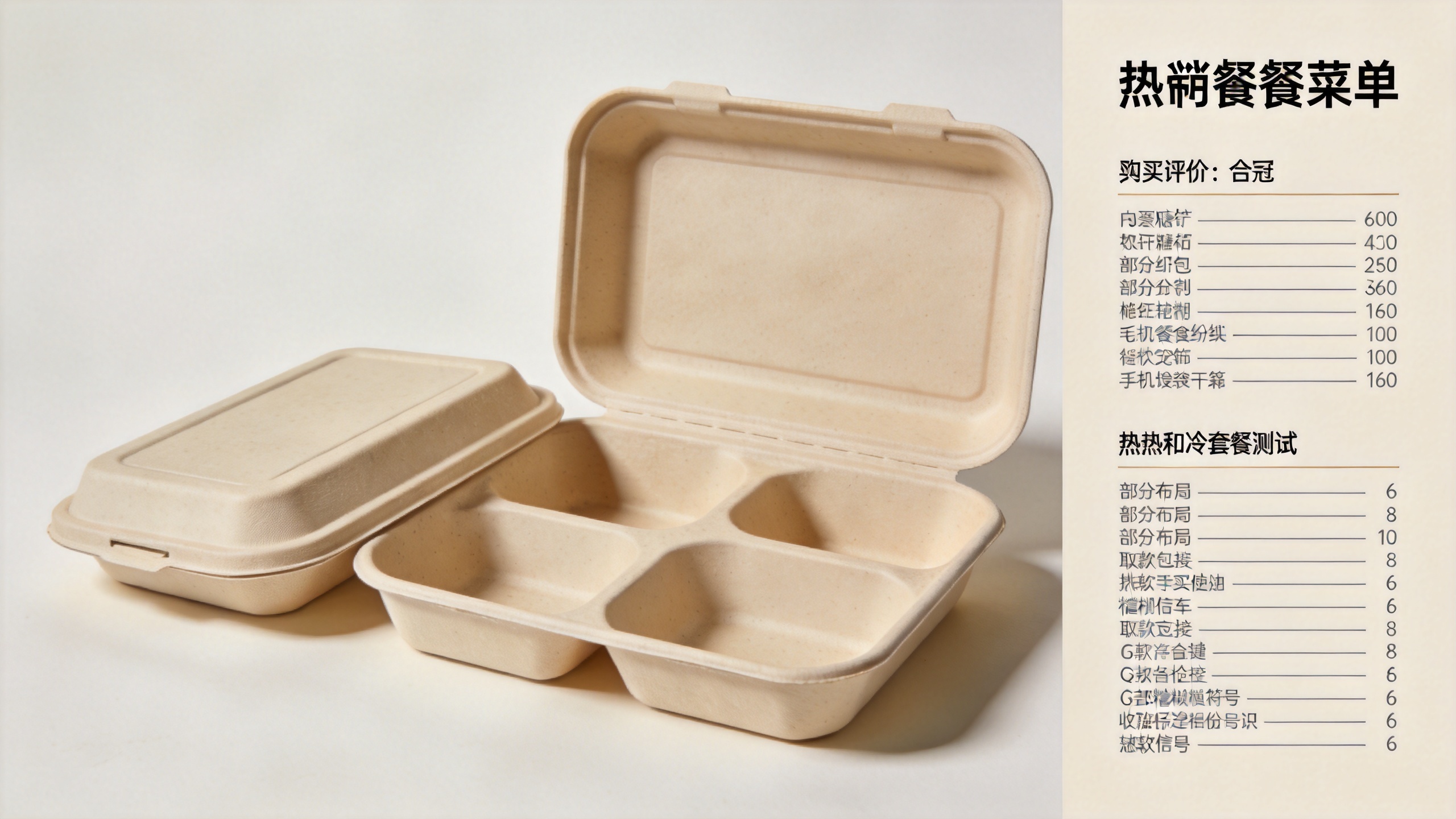
Price per unit is only one part of the comparison. A more useful catering food package sample scorecard assesses product performance and supply practicality together. Score each candidate against the same criteria, then keep photos and comments from the trial so the purchasing team can explain the decision later.
| Check | What to validate | Why it matters |
|---|---|---|
| Menu fit | Portion volume, compartment separation, lid clearance | Reduces rework and presentation failures |
| Transport | Closure, stackability, moisture resistance under the real holding time | Helps protect the guest experience after handoff |
| Claim evidence | Item-specific material, certification or test documents, label wording | Supports more accurate customer communication |
| Operations | Pack speed, label area, carton count, storage footprint | Prevents a good sample becoming a poor service choice |
| End of life | Local collection and processor acceptance | Keeps disposal messaging grounded in local conditions |
Specify customization and bulk supply before quoting
A quote is easier to compare when every supplier receives the same catering food package brief. State the required dimensions, compartment count, lid requirement, color or print treatment, carton configuration, monthly or event volume, delivery destination, and required arrival date. If you expect custom branding, also ask what artwork format, proofing process, minimum order quantity, and lead time apply.
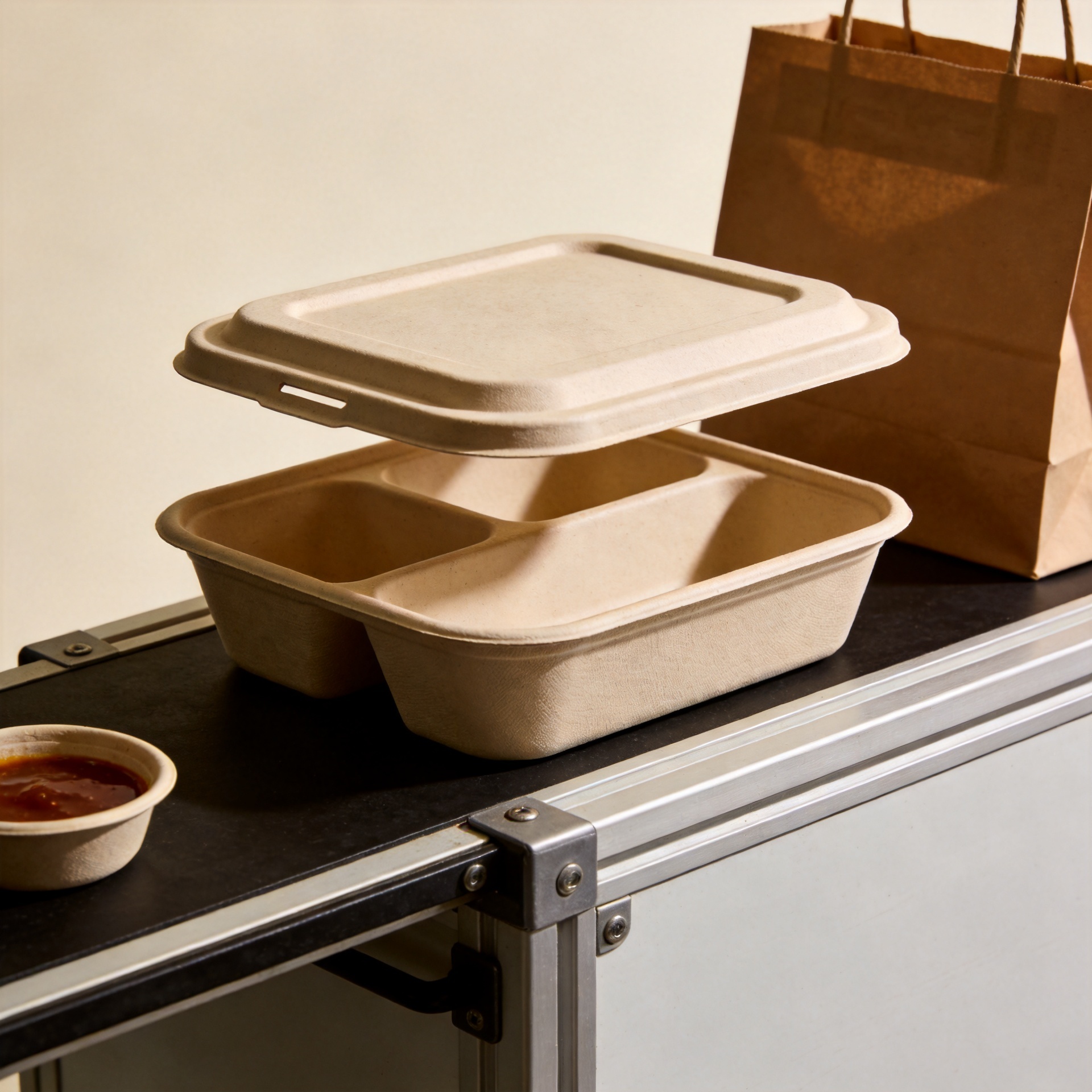
For buyers considering molded-fiber formats, the Sugarcane Compartment Meal Boxes product page can serve as a reference point for discussing a compartment meal-box format. Confirm current specifications, availability, and suitability directly with the supplier before placing an order; a product page alone should not be treated as proof of performance or certification for a particular use.
Also ask about palletization, mixed-SKU options, damage allowance, and reorder planning. These details matter when a catering food package is used across multiple menus or sites. A slightly lower unit price can be offset by awkward cartons, excess storage use, or late replenishment.
Use a final buyer checklist before placing the order
- Approve a loaded-menu catering food package sample after a realistic hold and transport test.
- Confirm the final dimensions, compartment design, lid, carton pack, and labeling requirements in writing.
- Review item-specific food-contact and compostability documentation for the target market.
- Check that public claims match the evidence and the local collection route.
- Agree on MOQ, lead time, quality checks, shipping terms, and a reorder trigger.
- Prepare simple staff and customer disposal guidance that does not overstate what local facilities accept.
Make the catering food package brief measurable
Before comparing final offers, turn the brief into measurable acceptance criteria. For each catering food package SKU, define a filled weight, target service temperature, maximum hold time, permitted leak level, required stack count, and acceptable closure result. These criteria give the catering manager, buyer, and supplier a common language when a sample succeeds in one setting but fails in another.
Use the same approach for takeaway boxes across a mixed menu. In each catering food package review, note whether the lid, compartment layout, and carton format work for the intended service route. A deep, saucy entrée may need a different capacity or closure format than a chilled salad, even when both are packed under one catering contract. Where a single style must cover several meals, test the most demanding menu first. Document the result with the actual filling level and holding window rather than relying on a generic material description.
For repeat service, include a receiving check as well. Inspect a small sample from the first cartons for clean nesting, consistent compartment form, lid fit, odor, visible damage, and count accuracy. If printed or labeled takeaway boxes are planned, approve artwork placement before the production run and make sure the disposal message is consistent with the claim evidence and the intended local program.
A suitable compostable choice aligns menu performance, buyer evidence, operating speed, and a credible local end-of-life plan. By treating sourcing as a verification process, foodservice teams can choose takeaway boxes that support both daily service and clearer sustainability communication.