 EN
Why Sugarcane Bagasse Meal Boxes Work for Takeaway Food
For a restaurant, caterer, or food retailer, takeaway packaging has one job that is more demanding than it sounds: the meal must reach the customer looking and eating as intended. A box that lets sauce migrate, allows a side dish to collapse into an entrée, or feels awkward in a delivery bag can undermine an otherwise excellent order. Sugarcane bagasse meal boxes are a practical option for many menus because molded fiber can combine a familiar food-box format with a lower-plastic material story.
Bagasse is the fibrous pulp left after sugarcane is processed. When it is molded into food containers, it can offer a rigid, paper-like format for individual meals, shared dishes, and catering portions. The right fit still depends on the menu, the hold time, the lid design, and the local end-of-life system. This makes bagasse takeaway packaging a decision about daily service performance—not simply a material label.
A meal box should protect the meal experience first
Customers judge delivery food before the first bite. They notice whether hot and cold components stayed apart, whether fried food retained some texture, and whether the container is clean on arrival. That is why takeaway packaging needs to be matched to portion size, food moisture, sauce volume, stacking needs, and the likely travel time.
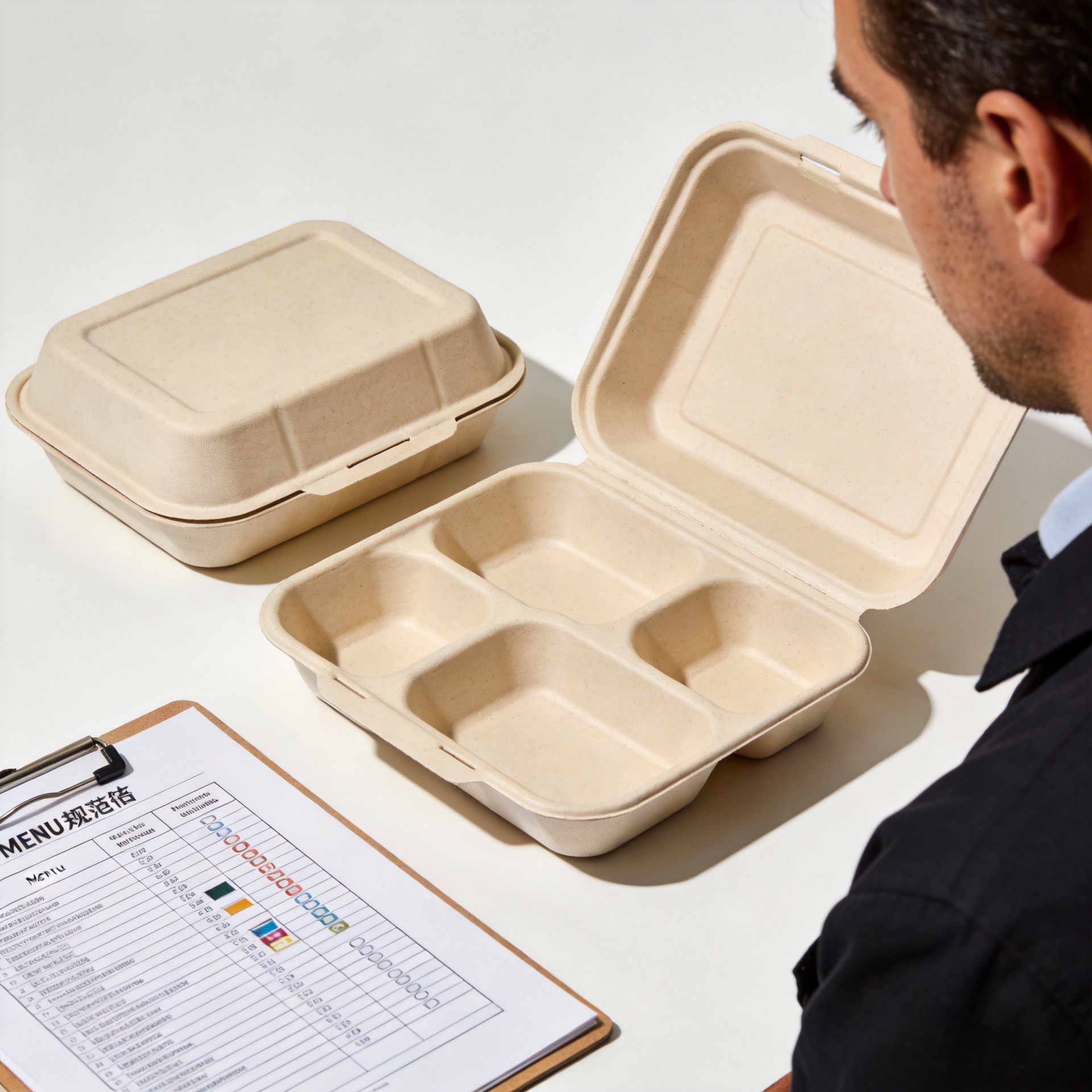
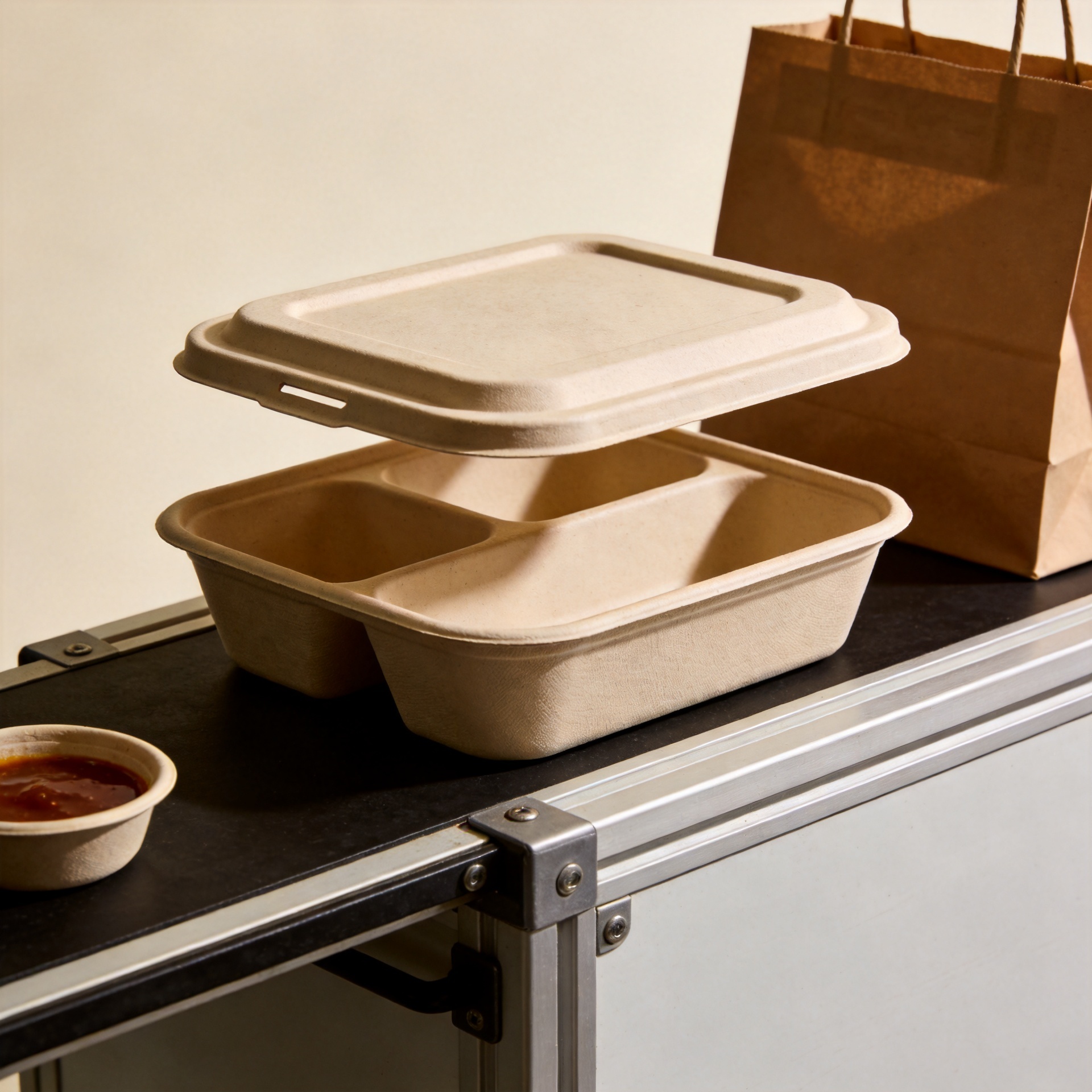
A compartmented bagasse meal box can help operators separate rice, proteins, vegetables, sauces, and sides in one pack. Separation is useful for plated lunch sets, school or workplace meals, event catering, and grab-and-go counters. It can reduce the need for extra side cups in some menu designs, although liquid-heavy dishes should be tested in the exact box and lid combination before a full rollout.
Why molded bagasse fits many food-service workflows
Bagasse containers have a molded-fiber structure that feels substantial in the hand and supports a wide range of single-meal formats. For food-service teams, the value is often operational: a single compartmented box can make packing more consistent during busy periods and give staff a repeatable layout for set meals.
- Portion organization: divided formats help staff place foods consistently and help customers identify components at a glance.
- Practical handling: a rigid, stackable format can be easier to carry from the pass to the pickup shelf when the selected design has been validated for the menu.
- Broad menu relevance: salad bowls, rice meals, bakery assortments, deli items, and prepared lunches can each have different box requirements, but molded fiber offers a recognizable platform to evaluate.
- Material communication: where appropriate, operators can explain that the pack is made from sugarcane-based molded fiber instead of presenting a vague “eco” claim.
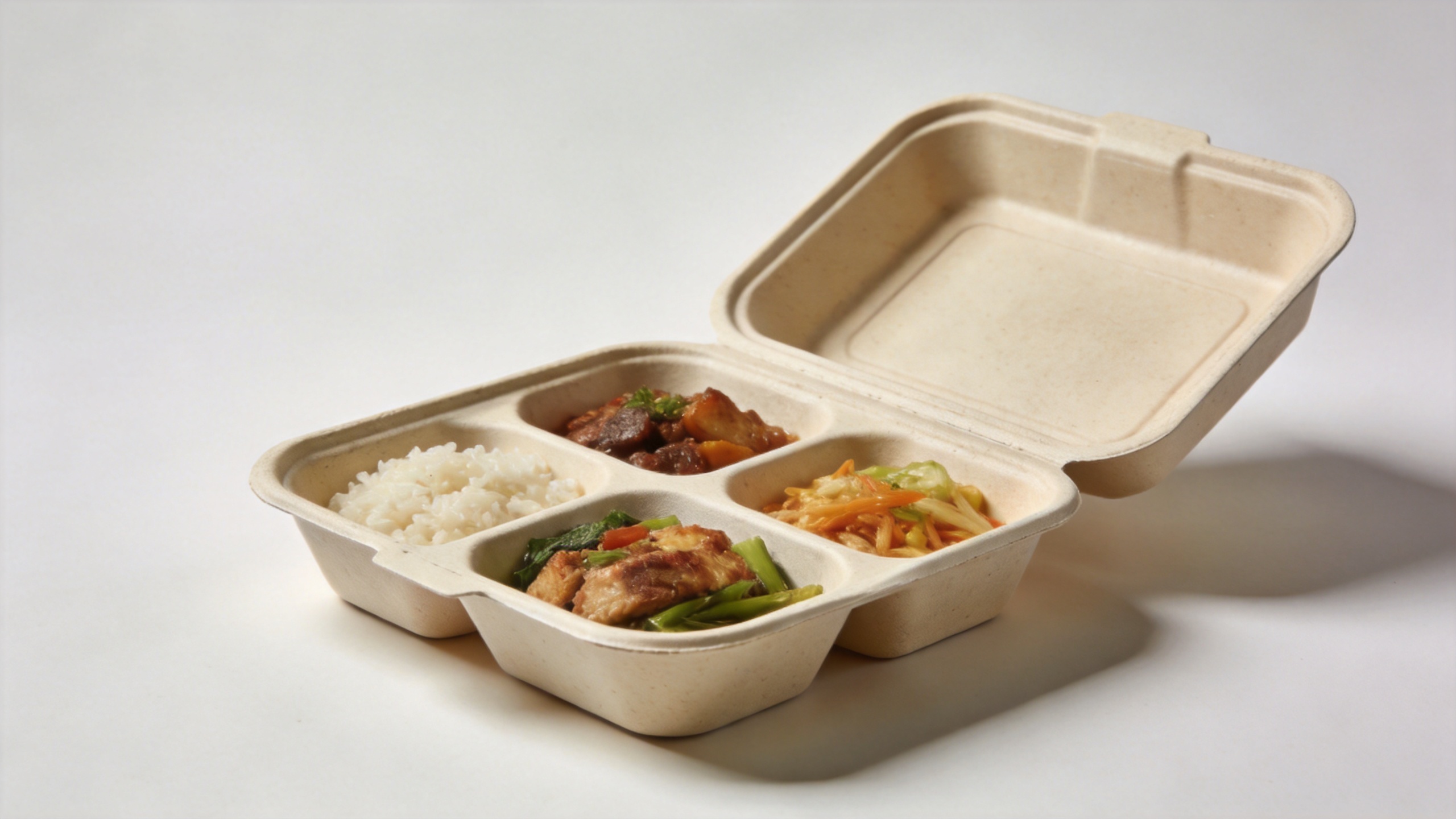
For buyers comparing formats, Sugarcane Compartment Meal Boxes provide a relevant starting point for reviewing compartment layouts and matching them to a specific takeaway menu.
Food contact, heat, and leak resistance require a product-level check
It is tempting to treat all bagasse containers as interchangeable. They are not. Food-contact suitability, temperature tolerance, microwave use, freezer use, oil resistance, and leak performance are specifications that can vary by product design and by the meal being packed. A menu with dry wraps places very different demands on takeaway packaging than a curry, noodle soup, or heavily dressed salad.
Before adopting any box, run a small service test with the actual food. Pack it at the normal fill level, close the selected lid, stack it as staff would, and hold it for the longest realistic delivery window. Check the base, corners, closure, and compartments for deformation or seepage. This test is more useful than a generic claim because it reflects the conditions your kitchen and delivery partners actually create.
Compostability should be communicated with care
Many buyers consider bagasse because it supports a compostable-food-container conversation. That benefit should be described accurately. Whether a particular item is accepted in composting depends on the product specification, applicable standards, coatings or additives, and the collection infrastructure available to the end user. A commercial composting facility and a local household waste program may not accept the same materials.
For responsible takeaway packaging, use product documentation and local requirements to decide what claims are suitable. Clear, conditional wording such as “check local acceptance requirements” is more credible than an unconditional disposal promise. It also helps purchasing teams align material selection, labeling, and waste guidance before the packaging reaches customers.
A quick selection checklist for pack food catering
When sourcing takeaway packaging for pack food catering, compare the whole service situation rather than only unit price:
- Map the menu: list dry, oily, saucy, hot, chilled, and mixed-component dishes separately.
- Choose the right layout: select compartment counts and capacities that keep the meal attractive without overfilling.
- Validate the closure: test the exact base and lid with delivery-bag movement, stacking, and normal hold times.
- Confirm documentation: request the food-contact and performance information needed for your market and intended use.
- Plan the message: make only the material and disposal claims that your documentation and local collection system support.
- Trial before scaling: ask kitchen staff and delivery partners for feedback after a limited menu test.
Where bagasse meal boxes make the most sense
Bagasse meal boxes are especially worth evaluating when an operation sells composed meals and wants a single pack that keeps components organized. They can suit cafés, workplace meal programs, food courts, casual restaurants, bakeries, caterers, and retailers offering prepared food. The format is often strongest where the menu is consistent enough to justify a repeatable packing routine.
They may be less suitable without further validation when a dish is extremely liquid, unusually heavy, or held for long periods. In those cases, container geometry, lid fit, and tested resistance matter more than the fact that the base is bagasse. The right decision is the format that protects the meal, works at packing speed, and gives customers clear disposal information.
A working scorecard for takeaway packaging
Use the following scorecard during a menu trial. It keeps takeaway packaging decisions connected to service reality, while giving kitchen teams a consistent way to review takeaway packaging performance. Each line below turns a general takeaway packaging discussion into a practical observation.
| Trial question | What to observe |
|---|---|
| Does the meal fit? | Check whether takeaway packaging leaves sensible headspace; record whether takeaway packaging protects the food’s presentation; compare takeaway packaging sizes against actual portions. |
| Do components stay separate? | Evaluate takeaway packaging compartments; check whether takeaway packaging prevents unwanted mixing; adjust takeaway packaging layout where needed. |
| Does the closure hold? | Close the selected takeaway packaging normally; stack the takeaway packaging in a delivery bag; inspect takeaway packaging after movement. |
| How does heat affect it? | Test hot-food takeaway packaging at normal fill levels; inspect the takeaway packaging base after holding; confirm takeaway packaging guidance with the supplier. |
| How does moisture affect it? | Use saucy dishes to test takeaway packaging; inspect seams in the takeaway packaging; choose takeaway packaging only after a realistic trial. |
| Can staff pack quickly? | Time the takeaway packaging workflow; ask whether takeaway packaging is intuitive; refine the takeaway packaging station if bottlenecks appear. |
| Does it travel well? | Simulate delivery handling with takeaway packaging; review stacked takeaway packaging orders; use the takeaway packaging result to guide rollout. |
| Is the message accurate? | Match takeaway packaging claims to documentation; explain takeaway packaging disposal conditionally; ensure takeaway packaging labels fit local guidance. |
| Would customers understand it? | Check the appearance of takeaway packaging; make takeaway packaging instructions concise; collect feedback on takeaway packaging after launch. |
| Is it viable at scale? | Review supply continuity for takeaway packaging; compare takeaway packaging case quantities; confirm takeaway packaging fits storage space. |
| Is the choice repeatable? | Document the approved takeaway packaging setup; train teams on takeaway packaging use; revisit takeaway packaging when menus change. |
Make the packaging decision part of service design
Good takeaway packaging is a quiet part of good hospitality. Sugarcane bagasse meal boxes can support organized presentation, practical packing, and a more specific material story for many takeaway menus. Start with the food, test the exact container under real delivery conditions, verify the product documentation, and communicate end-of-life guidance responsibly. That process helps food businesses choose a meal box that works beyond the shelf and all the way to the customer.