 EN
How to Use Poly Envelopes for Documents and Flat Goods
For an e-commerce team, choosing poly envelopes is less about finding a generic mailing bag and more about matching a lightweight pack to a real shipment. Documents, art prints, catalogs, decals, garment accessories, and other flat goods do not all need the same protection. A useful starting point is to list the packed item, any backing board or inner sleeve, the shipping route, and the way the recipient will open the package.
From a B2B purchasing perspective, poly envelopes work well when the item is flexible or already protected, the shipment needs moisture resistance, and a rigid carton would add unnecessary volume. They are not a substitute for crush protection. If a document must arrive without bends or a flat product has a fragile edge, pair the envelope with a rigid insert or choose a more protective format.
Start With the Item You Are Actually Shipping
Before comparing poly envelopes, measure the packed product rather than the product alone. Include the width, length, and thickness after any tissue, sleeve, backing board, label, or folded instruction sheet has been added. This avoids a common purchasing problem: an envelope that looks roomy on a specification sheet but becomes difficult to seal once the real packing workflow begins.
For documents, decide whether the priority is simple containment, presentation, or bend resistance. A contract packet or catalog may fit inside poly envelopes, but it may still need a board if the delivery route includes sorting equipment or handling that can flex the package. For flat goods such as stickers, textile patches, small accessories, or folded retail inserts, the same check applies: consider the final stack height, not just the largest face dimension.
- Flexible documents: choose poly envelopes with enough room for the document sleeve and a clean seal.
- Prints and important papers: add a rigid insert when a crease would reduce usability.
- Flat soft goods: allow for folded edges, labels, and the thickness created by multiple pieces.
- Small mixed packs: test whether different shapes create pressure points near the seal.
Where an order mix changes often, prepare a simple fit chart for the approved poly envelopes. The chart should connect each item group to its packing orientation and any backing material. This is more useful than assuming one envelope will suit every flat order.
In short, the right size is a packing decision. Leaving a modest working margin helps the packer load the item without forcing it into the opening, while too much unused space can let the contents slide and bunch during transport.
Choose a Closure That Matches the Handling Process
For everyday fulfillment, poly envelopes should be specified as part of a repeatable packing routine. The packing team needs to know where the opening sits, how the flap closes, and whether the item must be centered before sealing. These small workflow details help poly envelopes perform consistently across different order sizes.
The closure is one of the most practical parts of poly envelopes. A self-seal flap can make routine dispatch faster, but buyers should still check its placement, usable sealing area, and whether the packed item will interfere with the flap. For documents that may be returned or filed after delivery, a resealable option can be useful. For one-way dispatch, a permanent closure may better suit the workflow.
Ask a simple question during sample review: can a packer place the item, remove any liner, and create a consistent seal without touching the contents? A closure that is awkward for a single sample can become a larger consistency issue across a busy fulfillment run. It is also worth checking whether labels, barcode placement, or packing slips will overlap the opening area.
Match Poly Envelopes to Shipping Exposure
When reviewing poly envelopes for shipment protection, separate moisture exposure from impact protection. Poly envelopes can be a practical outer layer for an already protected flat item, but they do not turn a flexible sheet into a rigid pack. This distinction helps buyers choose poly envelopes for the right shipping conditions.
Poly envelopes are often selected because they can help shield flat shipments from routine splashes, dust, and handling exposure. That benefit depends on the finished pack. Open seams, an incomplete closure, or a pointed corner pressing against the film can change the outcome. The envelope should be evaluated alongside the item, insert, label, and route rather than as an isolated material.
For domestic or cross-border shipments, review the likely exposure points: collection, warehouse handling, line-haul movement, and final delivery. If the contents are sensitive to moisture, use an inner document sleeve or another suitable protective layer as appropriate. If the goods can be punctured or creased, add protection before they go into the envelope. Lightweight packaging can be efficient, but it should not transfer damage risk to the product.
Use a Simple Pre-Purchase Checklist
A written brief makes poly envelopes easier to source and compare. It also prevents teams from selecting poly envelopes solely by a nominal size while overlooking thickness, insert needs, or the intended opening method.
Procurement teams can make poly envelopes easier to compare by giving suppliers a consistent brief. This is especially helpful when the product will be used for both paperwork and flat merchandise. Instead of asking only for a size, describe the item profile and the packing outcome you need.
| Check | What to confirm | Why it matters |
|---|---|---|
| Packed dimensions | Width, length, and final stack thickness | Supports fit without stretching the opening or leaving excessive movement. |
| Item sensitivity | Whether bends, scuffs, moisture, or punctures are acceptable | Shows whether an insert or another format is needed. |
| Closure workflow | Permanent or resealable closure, liner handling, and packing speed | Connects the envelope choice to daily fulfillment work. |
| Shipping route | Shipping handling, storage conditions, and destination requirements | Helps set a realistic protection level. |
| Branding and labels | Print area, shipping-label placement, and readable product information | Keeps operational labels separate from design elements. |
During a sample trial, check whether the chosen poly envelopes lie flat after sealing and whether the label can be read without covering key handling information. If the item shifts, revise the size or add an insert before the next purchase order.
It is useful to request a small packing trial using the actual item set. A sample can show whether the opening is wide enough, whether the flap clears the contents, and whether the package stays flat after sealing. Looking beyond unit price matters here: packing time, product protection, and the need for extra inserts all affect the practical result.
When a Recycled Poly Mailer May Fit the Job
For a relevant shipment profile, poly envelopes can be reviewed alongside the available mailer format, dimensions, and packing materials. Buyers should compare poly envelopes using the same real item sample and handling sequence they expect in normal fulfillment.
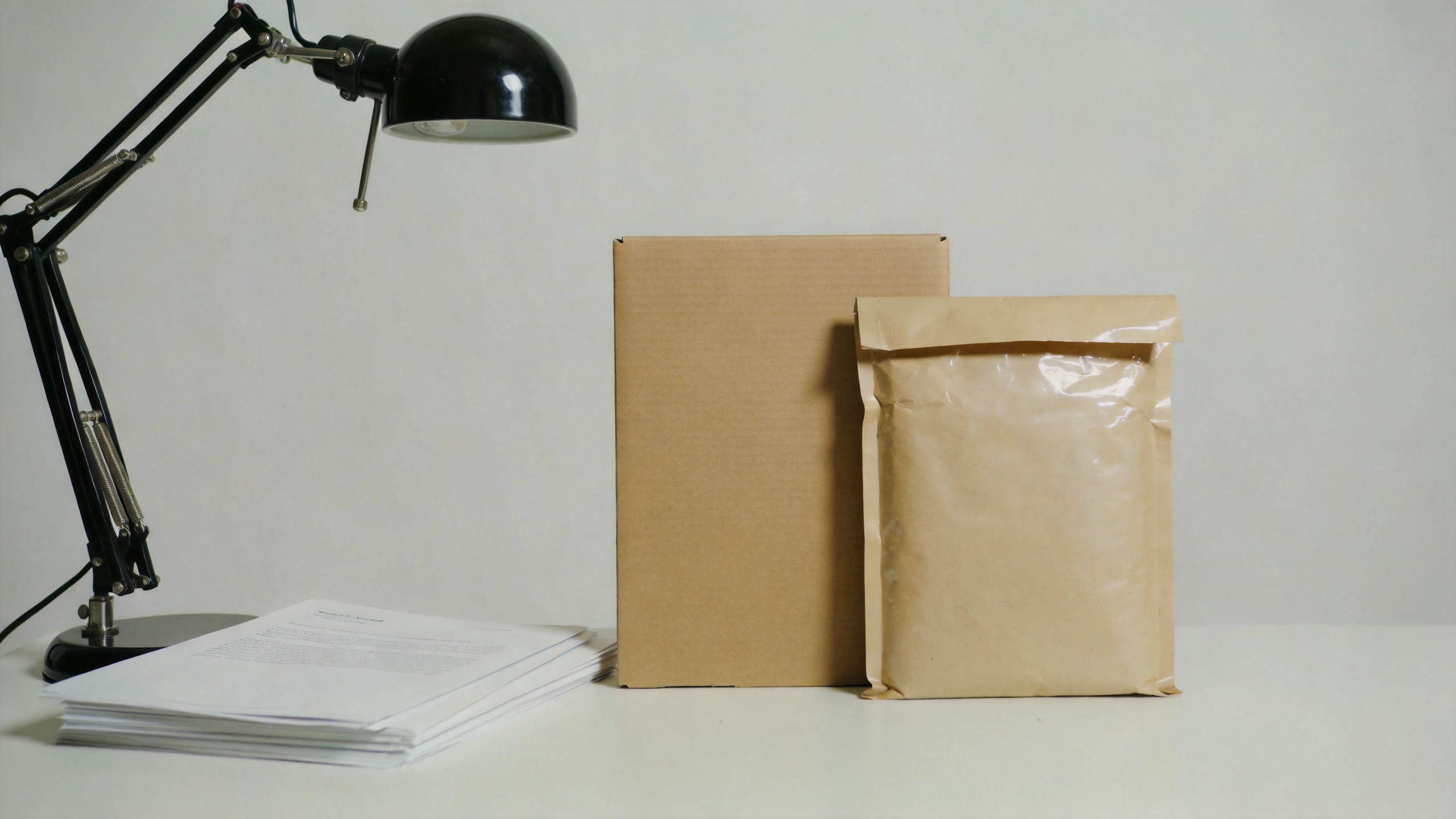
When a flat shipment matches the format, a Recycled Poly Mailer can be considered as part of the supplier comparison. The key is to verify the available specifications and test the format with the intended documents or goods. Material claims, print requirements, and local end-of-life options should be discussed separately from the basic shipping-fit decision.
For buyers working across markets, this distinction is important. A common envelope design may support a consistent fulfillment process, while labeling, collection systems, and customer-facing disposal guidance can vary by destination. Keep those questions in the project record instead of assuming one approach applies everywhere.
Before each production run, confirm that the approved poly envelopes are being used with the listed insert and closure method. This final check keeps the packaging decision aligned with the item profile.
Build a Repeatable Packing Decision
To standardize the choice, define one approved configuration of poly envelopes for each item group. Record the envelope size, any insert, the closure method, and the final inspection point. That gives new packers a clear reference and makes later changes to poly envelopes easier to test.
The practical use of poly envelopes begins with the item profile: what needs to fit, what needs protection, and what the packing team must do at the bench. Then confirm the closure, trial the finished pack, and add a board or inner sleeve whenever the contents require it. This approach gives e-commerce buyers a clear way to use poly envelopes for documents and flat goods without treating every lightweight item as the same shipment.
For the next sourcing review, send suppliers the actual packed dimensions, expected route, closure preference, and any non-negotiable protection requirement. That turns an envelope request into a usable packaging specification.