 EN
What Makes a Bubble Mailer Suitable for Gift and Small-Parcel Shipping?
For a small online seller, the right mailer is not simply an envelope with padding. It is a match between the item, the journey, and the unboxing expectation. Bubble mailers for small business can be a practical choice when a parcel is compact, reasonably light, and needs more cushioning than a paper envelope provides without the bulk of a carton.
From a procurement perspective, the useful question is not “Can this item fit?” but “Will the item still arrive in the condition the customer expects?” This guide explains where bubble mailers for small business fit in e-commerce shipping protection, where they do not, and what to confirm before placing a bulk order.
When bubble mailers are a sensible match
Bubble mailers for small business are generally suited to small, lightweight products with low-to-moderate breakage risk. Typical examples include costume jewelry with a protective pouch, stationery, fabric accessories, small beauty items, books, cable accessories, and gift add-ons. The built-in air cushioning can reduce movement and light contact damage during ordinary parcel handling.
They are especially useful when the product already has some inherent strength or its own retail pack. A boxed keychain, a soft scarf, or a carded accessory may need protection from scuffs and minor pressure, but not the rigid walls of a shipping box. In these cases, bubble mailers for small business help keep packing steps simple while maintaining a presentable arrival.
Search results for padded shipping envelopes commonly position them for compact, lightweight goods and note that they may reduce the need for separate void fill. That is a useful starting point, not a universal rule. The item’s corners, surface finish, and route conditions still matter.
Match the cushioning level to the parcel risk
The bubbles inside a mailer offer light cushioning, but they do not turn a flexible envelope into a crush-resistant container. Before choosing bubble mailers for small business, sort products into three practical groups:
- Usually suitable: soft goods, flat products, small accessories, and retail-packed items that can tolerate gentle bending or compression.
- Suitable with an added inner wrap: jewelry, cosmetics, small electronic accessories, or gift items with delicate finishes. A tissue wrap, pouch, or small inner sleeve can limit surface contact and movement.
- Usually better in a box: glass, ceramics, pointed-edge objects, heavy metal parts, rigid collectibles, and items that can be damaged by corner pressure or stacking.
A common mistake is to focus only on whether a product is “small.” A small ceramic ornament may be compact, yet it can still need a rigid outer box. Conversely, a larger but flexible textile accessory may travel well in a padded envelope. Bubble mailers for small business work when their protection level matches the actual failure mode, not just the product dimensions.
Choose size by usable space, not product size alone
A mailer should leave enough room for a protective inner wrap and a clean seal, but not so much room that the item slides freely. Excess empty space allows a product to gather speed inside the mailer; a mailer that is too tight can strain the closure or put pressure on edges. For gifts, this balance also affects presentation.
When reviewing bubble mailers for small business, measure the packed item rather than the bare product. Include its retail box, tissue, card insert, pouch, or any protection that ships with it. Then check the mailer’s internal dimensions and closure area. If you are between sizes, make a sample pack and test the seal rather than relying on a catalog size alone.
Consider the material and the shipping environment
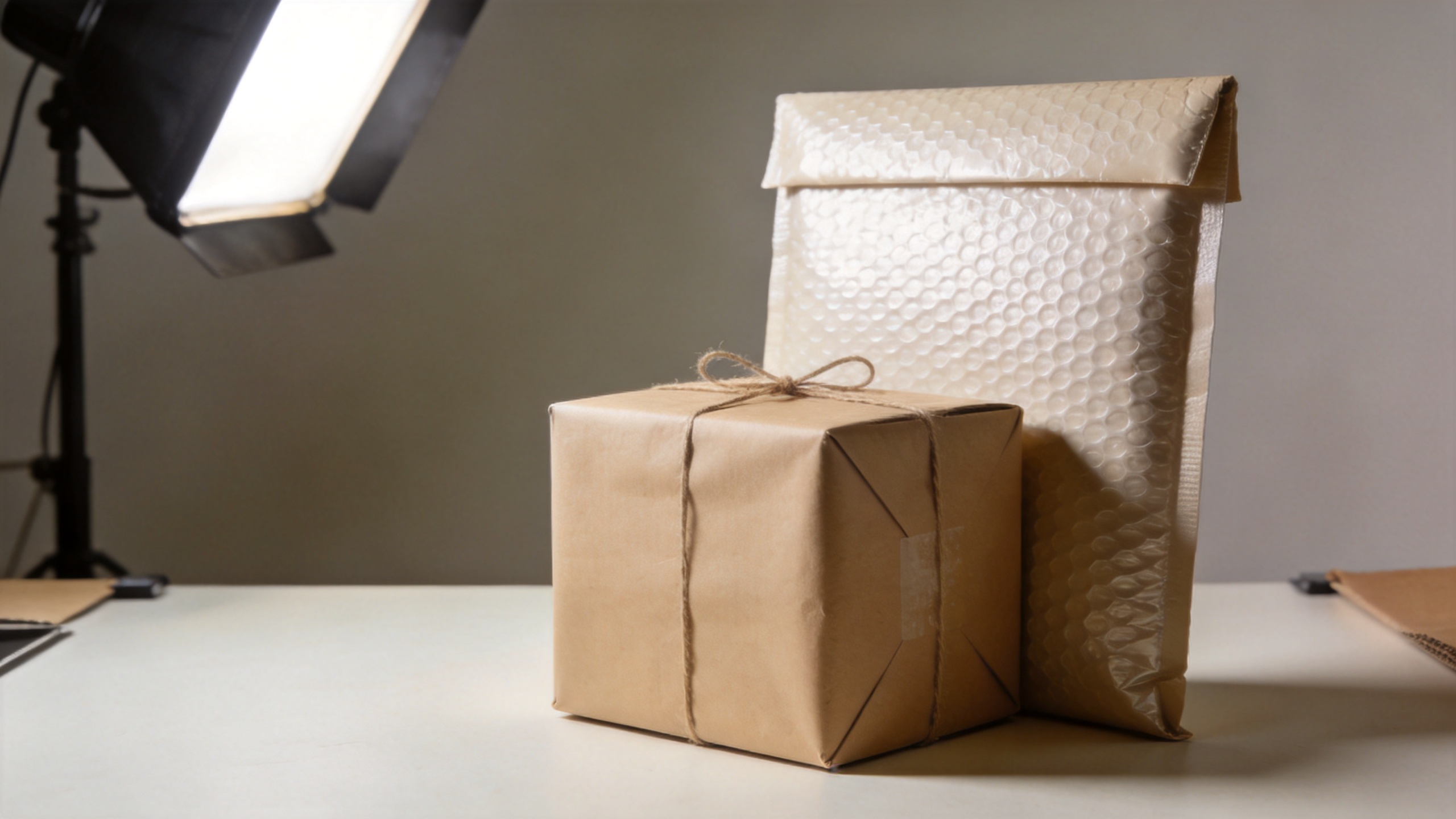
Different mailer constructions can support different packing priorities. A kraft-style outer surface may suit a natural or gift-oriented presentation. A poly outer layer may be relevant when a route is likely to involve moisture exposure. Neither material choice replaces a route assessment: long-distance handling, multiple transfer points, seasonal weather, and unattended delivery all increase the value of a more conservative packing choice.
For this reason, bubble mailers for small business should be evaluated alongside the delivery service, destination, and order value. A simple local shipment of a low-risk accessory is different from a gift order moving across borders with several handling stages. Keep the evaluation conditional rather than assuming one mailer design suits every order.
Check closure, tamper evidence, and packing workflow
The closure is part of the protection system. A self-seal flap can speed up repetitive packing, but it needs enough adhesive contact after the contents are inserted. Do not overfill the envelope, fold the flap over bulky corners, or rely on a stressed seal for a heavy item. For higher-value gifts, your team may also want an outer label, a packing slip position, or an additional sealing step based on the route and internal shipping policy.
Small teams benefit when bubble mailers for small business are easy to identify, store, and pack consistently. Keep the most-used sizes near the packing station, write a packing rule for each product family, and test a few representative orders before standardizing a bulk purchase.
A quick pre-purchase checklist
- Is the product light enough that the seal and flexible envelope will not be overloaded?
- Can it tolerate modest compression, or does it need rigid walls?
- Have you measured the item with its gift wrap or retail pack included?
- Will the route add moisture, long transit time, or repeated handling?
- Does the closure remain flat and fully bonded after packing?
- Have you tested the chosen mailer with a representative shipment before ordering in volume?
These questions make the choice more reliable than selecting bubble mailers for small business solely by color, price, or outside dimensions.
Use confirmed product information when comparing options
If you are building a repeatable packaging program, it helps to review a product page and request the specifications that matter to your order mix. You can start with this Bubble Lined Mailer product reference, then confirm the appropriate size, material structure, and packing use case with the supplier before ordering.
The practical takeaway is straightforward: bubble mailers for small business are a strong fit for gifts and small parcels when the contents are compact, light, and not highly crush-sensitive. Use them as a measured layer of cushioning, not as a substitute for rigid protection when the product or route calls for it.