 EN
Sustainable Takeaway Packaging Ideas for Restaurants and Delivery Brands
For a restaurant or delivery brand, eco friendly take away packaging is not simply a material choice. The pack has to arrive in good condition, keep food separated where needed, work with the kitchen’s service rhythm, and give customers a clear way to dispose of it. A practical starting point is to assess the complete route: food type, delivery time, container structure, and the disposal pathway available in the target market.
From a B2B purchasing perspective, it helps to put performance, sourcing consistency, and end-of-life communication on one checklist. That helps teams avoid a familiar mistake: choosing a pack for its material label first and discovering later that it leaks, traps steam, fails to stack, or does not fit local collection systems.
Start with the meal and delivery journey
Good eco friendly take away packaging begins with what the customer is ordering. A dry pastry, a sauced noodle bowl, a fried meal, and a multi-item lunch each create different demands. Before comparing materials, map the journey from packing bench to customer: How long will the food travel? Does it need ventilation? Could sauces migrate between compartments? Will several packs be stacked in a rider bag?
- Hot, moist food: check heat tolerance, lid fit, and whether steam needs an escape route to protect texture.
- Sauced meals: verify the seal and base rigidity with the actual portion size, not only an empty sample.
- Multi-item orders: use compartments when separation helps reduce spills or flavor transfer.
- Delivery-heavy operations: test stacking, bag fit, and how the closure performs after a realistic travel time.
In this category, sustainable intent does not replace functional testing. A container that reduces remakes and food loss may support a more considered operation, provided its material and disposal claims are also documented accurately.
Choose a material route, then check the local pathway
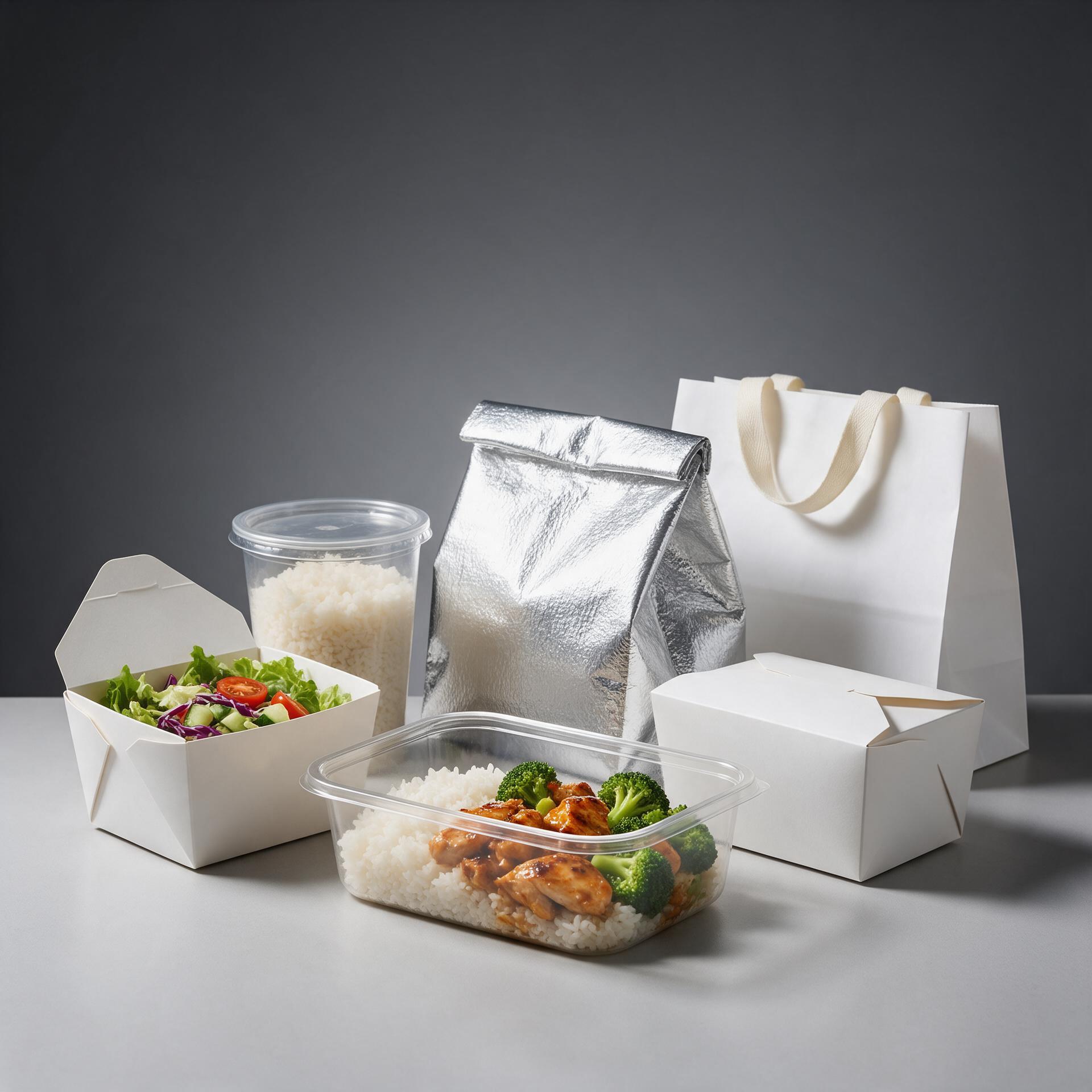
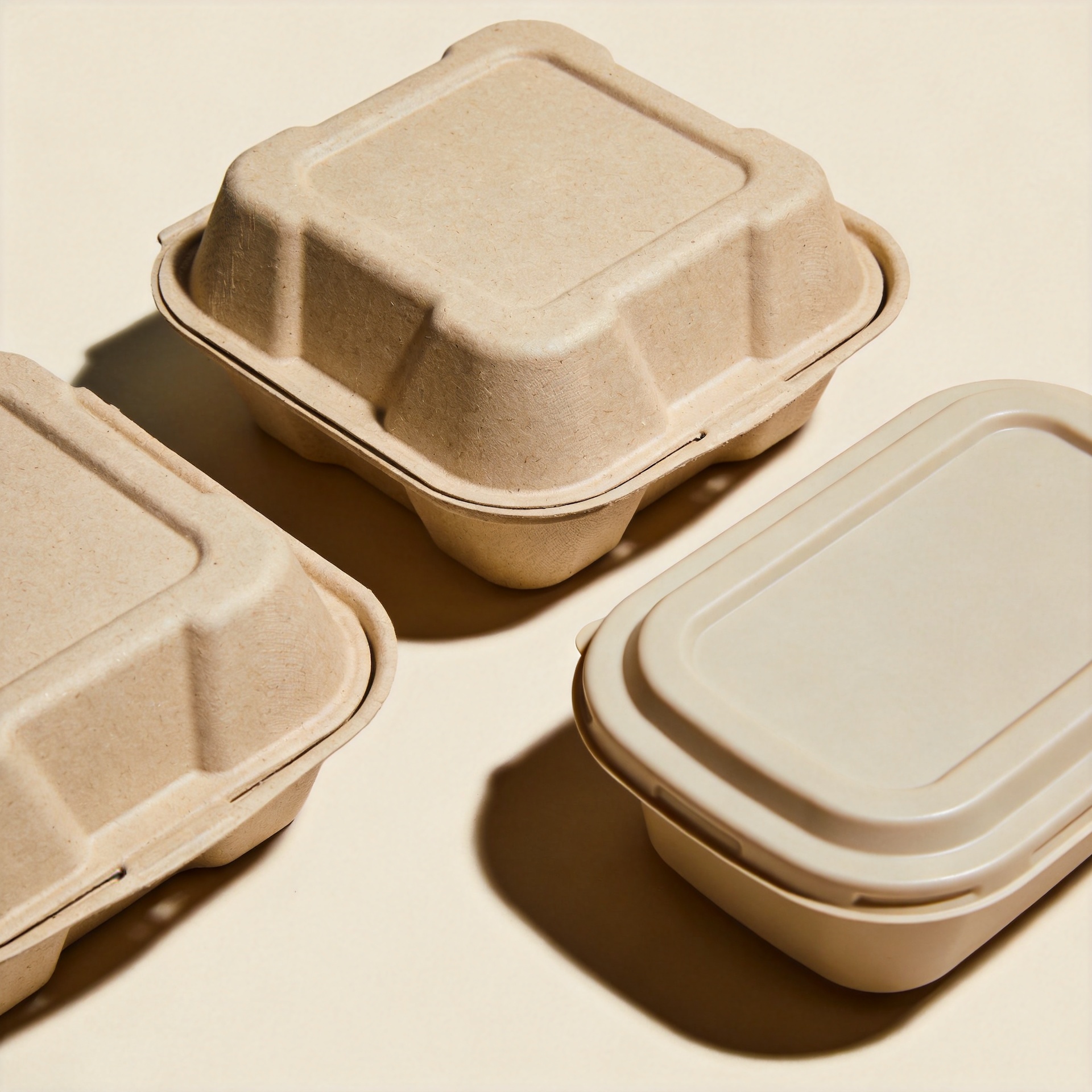
Restaurants often review fiber-based molded containers, paperboard formats, recyclable plastic designs, compostable formats, and reusable systems. Each route can make sense in a defined setting, but none is automatically the right answer everywhere. The important question is not just “What is this made from?” but “What happens to this complete pack after use in our market?”
For example, compostable packaging is most meaningful when the local program can collect and process the relevant format. ASTM D6400 is a commonly referenced specification for plastics intended for municipal or industrial aerobic composting conditions. It can be useful documentation to request when compostability is central to a project, but it does not by itself confirm that a customer’s area accepts the item. Collection rules, contamination guidance, and facility capabilities still need local confirmation.
Likewise, a recyclable design needs more than a recycling symbol. The material mix, coatings, attached components, food residue, and sorting infrastructure can affect whether it enters a viable route. In other words, material naming is the start of the conversation, not the final decision.
Use compartments where they solve a real service problem
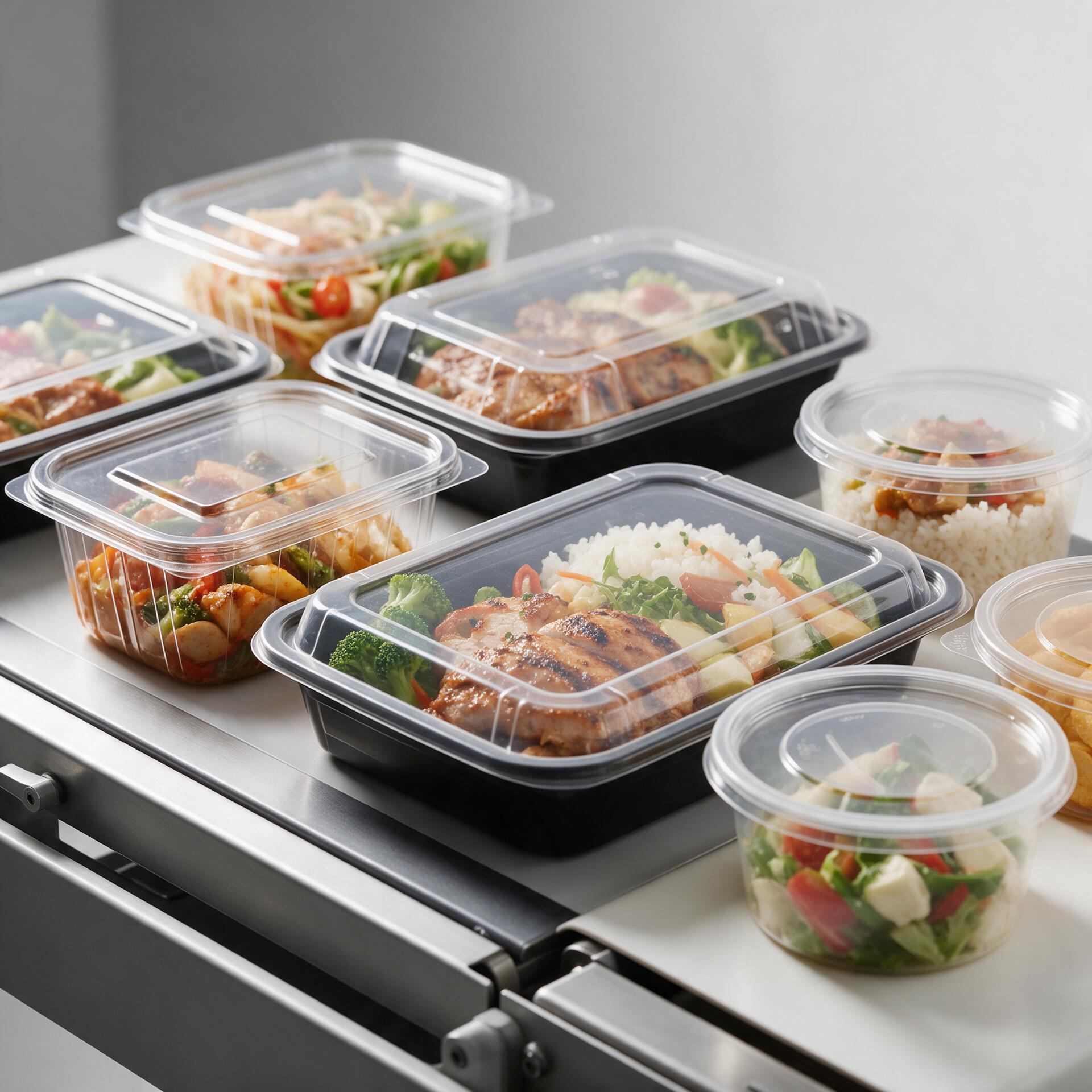
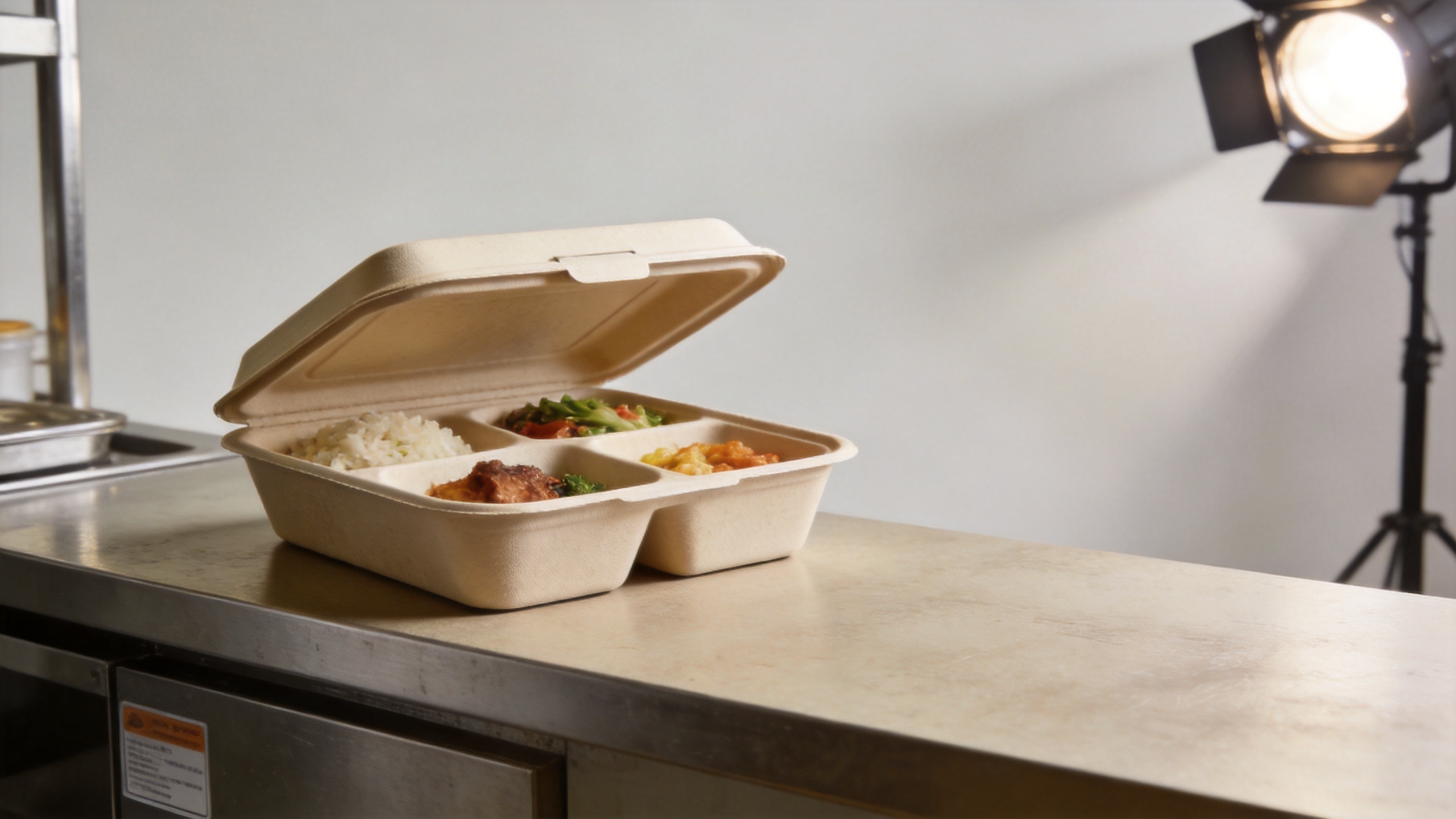
Compartmented formats are useful for meals with a main dish, sides, sauces, or dietary separation needs. They can simplify portion presentation and reduce food movement in transit. For restaurants building an eco friendly take away packaging program, the relevant test is whether the divider layout matches the menu rather than whether it merely looks convenient in a catalog.
One option to review for segmented meal formats is Sugarcane Compartment Meal Boxes. When evaluating a product page or sample, ask for the dimensions, compartment configuration, closure approach, and intended food-use conditions. Then test it with your own menu. Product naming alone should not be treated as evidence of a particular barrier property, certification, or disposal outcome.
For many buyers, this is where the decision changes: rather than comparing unit prices in isolation, they compare a pack’s ability to protect the meal, support kitchen speed, and reduce the chance of an avoidable replacement order.
Build sustainability claims around evidence, not broad labels
Clear communication makes eco friendly take away packaging easier for customers and staff to use correctly. Claims should match what the supplier can document and what the local waste stream can handle. Avoid treating “plant-based,” “compostable,” “recyclable,” and “biodegradable” as interchangeable terms.
A simple evidence file for each format can include the material description, product specifications, relevant test or certification documents, and market-specific disposal guidance. If a claim depends on industrial composting, say so plainly. If local acceptance has not been checked, treat it as an item to verify rather than a promise on the menu or package.
This approach also helps delivery platforms, franchise teams, and independent locations maintain consistent language. The same packaging choice may be handled differently in different regions, so a conditional instruction is often more useful than a universal statement.
Turn eco friendly take away packaging into an operating standard
To make eco friendly take away packaging repeatable across shifts and locations, turn the selection brief into a simple operating standard. List approved formats by menu category, record the conditions tested, and note the market where any disposal instruction applies.
A useful eco friendly take away packaging review also assigns ownership. Kitchen teams can report handling issues, delivery teams can flag stacking or transit concerns, and procurement teams can retain supplier documentation for the selected format.
When a menu changes, revisit the eco friendly take away packaging choice with the new portion, sauce level, and delivery profile. This keeps the decision tied to real service conditions instead of a one-time material comparison.
A procurement checklist for restaurant and delivery teams
- Define the food: record temperature, moisture, oil content, portion weight, and whether components must stay separate.
- Define the journey: estimate hold time, stacking load, delivery distance, and bag conditions.
- Review the structure: inspect the container, lid, coating, label, and any separate accessories as a system.
- Request documentation: ask suppliers for material details and the evidence supporting any sustainability claim relevant to your market.
- Check the disposal route: confirm local collection and processing conditions before giving customers disposal instructions.
- Run a menu trial: test the format with real food, staff handling, and a representative delivery window.
These steps are especially useful for buyers serving several markets. A shared specification sheet can keep the core product requirements consistent while allowing disposal guidance to change with local conditions.
Make the next packaging decision easier
The most useful eco friendly take away packaging plan is one that connects material choices with the reality of food delivery. Start with meal protection and customer use, then check the evidence behind the material claim and the local path after disposal. This is more work than selecting a label, but it creates a clearer brief for suppliers and a more dependable experience for customers.
For an initial sourcing conversation, prepare a sample menu, expected order volumes, target markets, and the questions your operations team needs answered. That gives packaging suppliers a practical basis for proposing formats, including compartmented meal containers, without overstating what any one material can achieve.