
 EN
EN
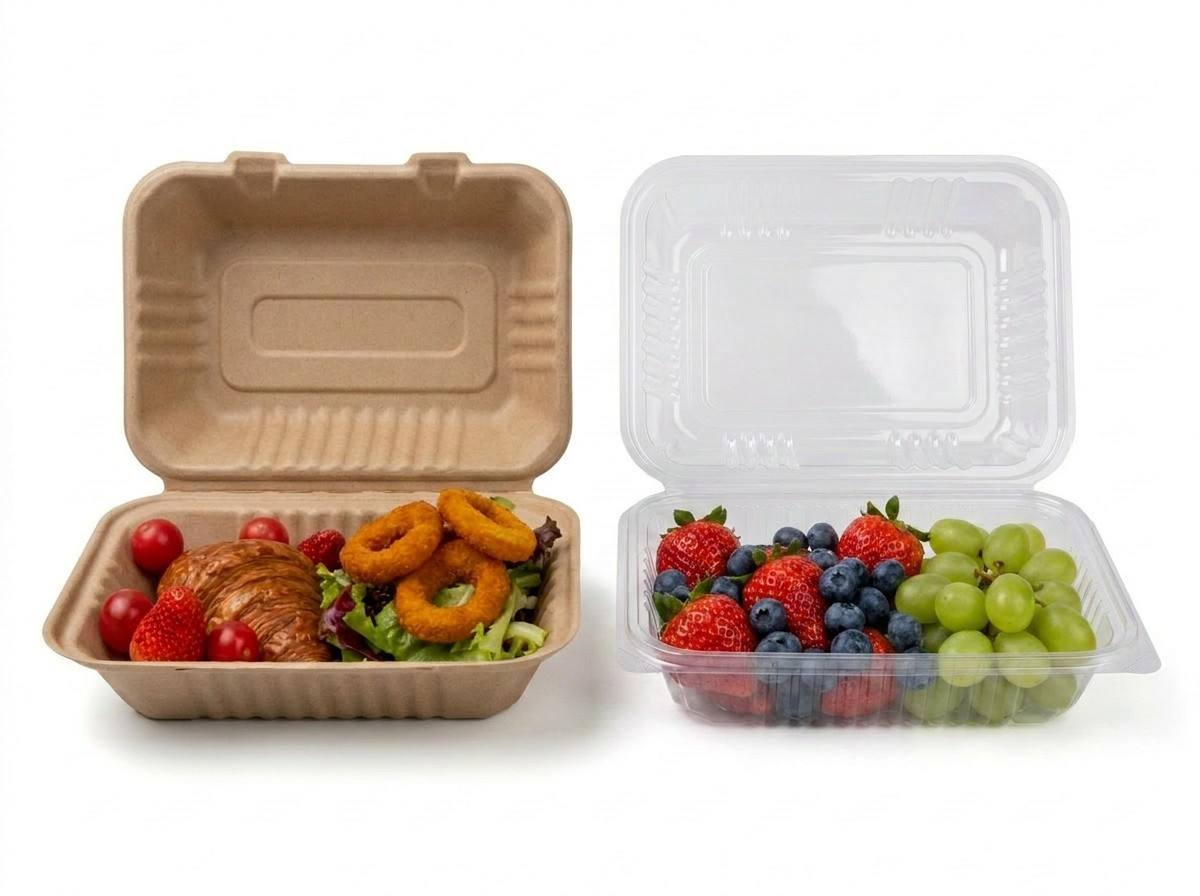
The core difference between bagasse and plastic food containers is material origin and end-of-life. Bagasse is made from sugarcane fiber — a renewable agricultural byproduct — and biodegrades in approximately 90 days in industrial composting facilities. Plastic is petroleum-based and persists in landfills for hundreds of years. For foodservice businesses, bagasse offers better heat resistance and a genuine eco story, without sacrificing performance.
What Is Bagasse? (And Why It Matters for Food Packaging)
Bagasse is the fibrous residue left after sugarcane stalks are crushed to extract juice. Once treated as waste, it is now molded into high-performance food containers. Because it comes from an existing agricultural byproduct, producing bagasse containers requires no additional land use or fossil fuels.
Bagasse vs Plastic Food Containers: Full Comparison
Benefits of Bagasse Containers for Foodservice Businesses
1. Genuine eco credentials | Bagasse containers give restaurants a real sustainability story — not greenwashing. "Made from sugarcane fiber, certified compostable" is a verifiable claim that resonates with today's eco-conscious diners.
2. Heat performance you can trust | Bagasse containers are microwave-safe up to approximately 200°C for 2–3 minutes — well above the performance of most standard plastics. Food stays hot. The container stays intact, without warping, leaching, or releasing chemicals under heat.
3. Naturally steam-venting |The fiber structure allows excess steam to escape — keeping fried food crisp during delivery instead of turning soggy. At the same time, the surface is grease and water resistant, preventing leaks.
4. Regulatory future-proofing |Single-use plastic bans are expanding across the EU, UK, US states, and Southeast Asia. Switching to bagasse now avoids forced compliance scrambles later.
Limitations to Know
We believe in transparency:
- Long-term liquid storage — bagasse handles hot meals and delivery well (several hours). Not recommended for storing thin soups or liquids over multiple days in the refrigerator.
- Not suitable for freezing — the material softens below 0°C, so bagasse is not recommended for frozen food storage.
- Composting infrastructure — the approximately 90-day biodegradation requires industrial composting conditions. In standard landfills, it still degrades faster than plastic, but not at the same rate.
How to Switch Your Restaurant to Bagasse Packaging
- Audit your current containers — identify your highest-volume items (burger boxes, meal trays, salad bowls)
- Request samples — test your hottest and oiliest dishes before committing. Request a free sample
- Start with signature items — switch your most popular or premium delivery items first
- Tell your customers — add a note on your menu or packaging: "Packaged in certified compostable sugarcane containers"
Explore our full range of Sugarcane Bagasse Containers and Paper Food Containers.
FAQ
Q: Are bagasse containers really better than plastic?
Yes, from an environmental perspective. They are made from renewable agricultural waste, biodegrade in approximately 90 days in industrial composting, and offer better heat resistance than most standard plastics.
Q: Can bagasse containers go in the microwave? What about the freezer?
Yes for microwave — safe up to approximately 200°C for 2–3 minutes. Not recommended for freezing: bagasse softens below 0°C, so it is not suitable for frozen storage.
Q: Is bagasse packaging more expensive than plastic?
Currently slightly higher per unit than the cheapest plastics, but the gap is closing. When you factor in regulatory compliance, brand value, and customer loyalty, the total value is strong.
Q: How long does it take for bagasse to biodegrade?
In an industrial composting environment, approximately 90 days.